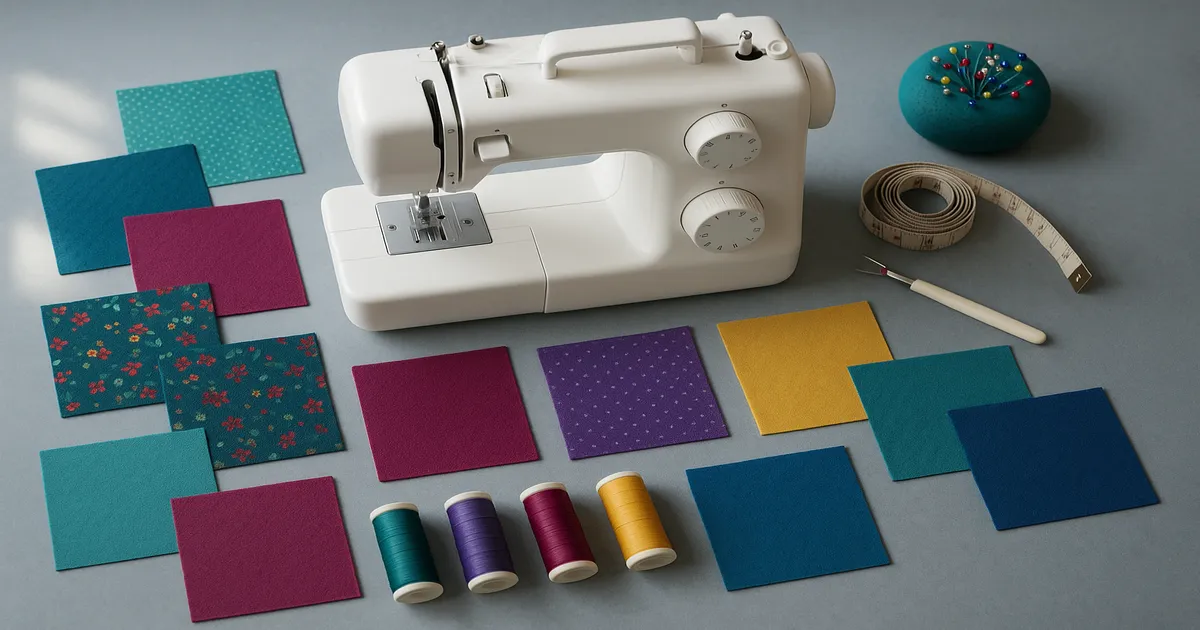
Quick Answer: The best sewing machine for beginners right now is the Brother CS6000i — forgiving, well-priced at around $180–$220, and it comes with everything you need to start. If you want something simpler and bulletproof, the Janome 2212 is the mechanical alternative. Either way, avoid anything under $100. Cheap machines create problems that look like your fault but aren’t, and that’s the fastest way to quit before you’ve really started.
If you’re searching for the best sewing machine for beginners and feeling overwhelmed, you’re in good company — the market is flooded with machines that look nearly identical but perform very differently. The gap between a $90 machine and a $200 machine isn’t just features; it’s whether the thing will actually cooperate while you’re still learning. I’ve watched so many people blame themselves for tension problems and skipped stitches that were entirely the machine’s fault. Don’t let that be you.
Here’s what you actually need to know before you buy.
The Best Beginner Sewing Machines Right Now
Top Picks at a Glance
| Machine | Price Range | Best For |
|---|---|---|
| Brother CS6000i | $180–$220 | Best all-around beginner machine |
| Singer Heavy Duty 4423 | $170–$200 | Heavier fabrics, denim, canvas |
| Janome 2212 | $150–$180 | Maximum simplicity and reliability |
| Brother SE700 | $280–$320 | Growing into embroidery later |
| Bernette b05 Academy | $200–$250 | Best build quality for the price |
What Should You Actually Spend?
The $150–$350 range is the sweet spot, and it’s not arbitrary. Below $100, you’re almost always getting plastic internal components that strip under regular use. A machine that fights you is worse than no machine at all — a frustrating first experience is the number one reason beginners quit sewing, and it’s a shame when the problem was the equipment, not the person.
How to Choose the Right Beginner Sewing Machine
Match the Machine to What You Want to Make
What you plan to sew matters more than most people realize. Quilting and lightweight garments need consistent stitch quality and decent throat space — aim for at least 6 inches (15cm) from the needle to the right-side column. Heavy fabrics like denim and canvas need a more powerful motor; look for machines rated at 1.0 amp or higher. Garment sewing benefits from a variety of stitches, especially stretch stitches like the zigzag and triple stretch stitch.
Match the Machine to How Your Brain Works
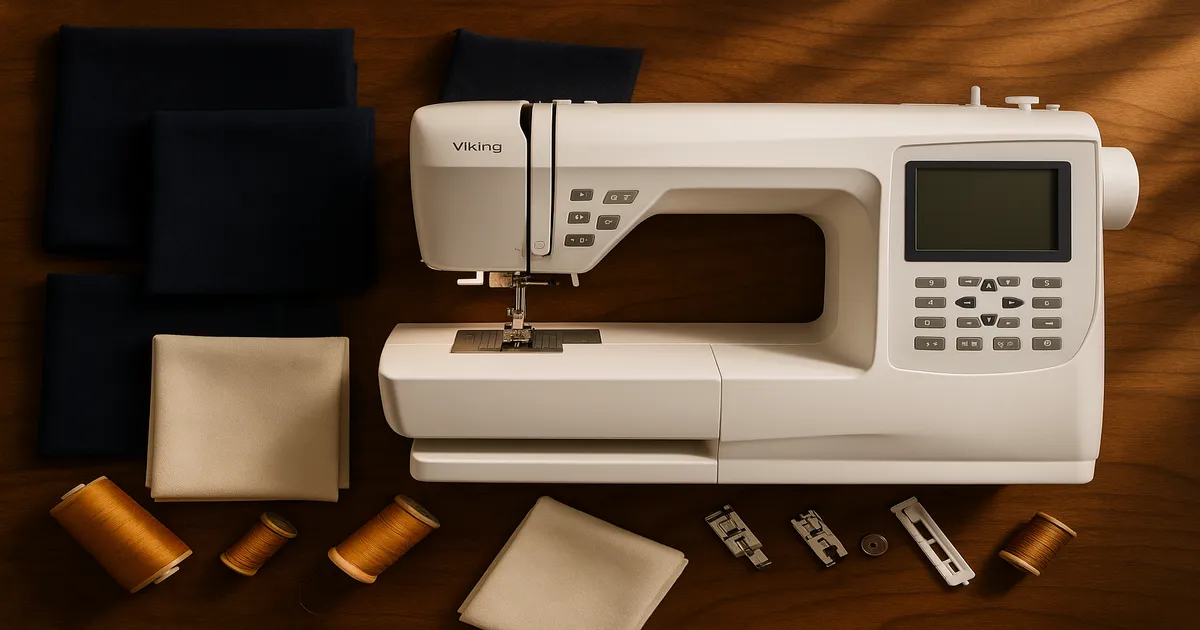
This step gets skipped constantly, and it shouldn’t. If you’re comfortable with technology and like visual feedback, a computerized machine with an LCD screen will feel intuitive. If you prefer physical dials you can actually touch and turn, a mechanical machine gives you that immediate, tactile connection. And if 200 built-in stitches sounds overwhelming rather than exciting, a 12-stitch mechanical machine is genuinely the better choice — you’ll learn to use it instead of just staring at the menu.
Drop-In vs. Front-Loading Bobbins
Drop-in (top-loading) bobbins are easier to thread, easier to monitor, and the right call for most beginners. You drop the bobbin in from the top, watch the thread level through a clear cover, and threading takes about ten seconds once you’ve done it a few times. Front-loading bobbins sit in a removable case and offer more precise tension control — which is why experienced sewists often prefer them — but they’re trickier to thread initially. The Janome 2212 uses a front-loading system, but it’s so well-engineered that it’s still beginner-friendly.
Handle It Before You Buy If You Can
If there’s a JOANN, an independent quilt shop, or a Bernina dealer near you, go in and ask to sew a test seam. Listen for a smooth, consistent sound rather than rattling or grinding. Notice whether the presser foot pressure feels even, whether the bobbin area is easy to access, and whether the needle threader is something you could actually use regularly. A machine that feels right in person is one you’ll actually sit down at.
Best Beginner Sewing Machines: Full Reviews
Brother CS6000i — Best All-Around Pick
Price: ~$180–$220 (Brother CS6000i)
This is the machine I’d hand to most beginners without hesitation. It’s computerized with 60 built-in stitches, uses a drop-in bobbin, and comes with an extension table that’s genuinely useful for larger projects. The LCD screen guides you through stitch selection without being overwhelming, and the automatic needle threader actually works reliably — which isn’t something you can say about all of them. Brother backs it with a 25-year limited warranty.
Best for: Beginners who want room to grow without buying another machine in a year.
Singer Heavy Duty 4423 — Best for Heavier Fabrics
Price: ~$170–$200 (Singer Heavy Duty 4423)
At 1,100 stitches per minute with a motor built for denim and canvas, the 4423 punches well above its price. It’s mechanical — physical dials, no LCD screen, fast to learn. The 23 built-in stitches cover everything a beginner needs. If you know you want to sew bags, home dec projects, or heavier garments, this is the smarter pick over the CS6000i. Singer offers a 25-year limited warranty.
Best for: Beginners who prefer a no-frills mechanical machine or plan to work with heavier fabrics.
Janome 2212 — Best for Simplicity and Reliability
Price: ~$150–$180 (Janome 2212)
Twelve stitches. Physical dials. Legendary reliability. The 2212 is what sewing teachers recommend when someone says “I just want something that works.” It’s the least exciting option on this list and also one of the best. The front-loading bobbin requires a tiny bit more learning upfront, but it’s a non-issue after the first week. Janome’s 25-year warranty on mechanical parts backs up what the machine’s reputation already says.
Best for: Anxious beginners, or anyone who wants to learn sewing without also learning a machine.
Brother SE700 — Best If Embroidery Is on Your Radar
Price: ~$280–$320 (Brother SE700)
The SE700 is genuinely two machines in one — a solid sewing machine with a built-in embroidery function. If you already know you’re interested in embroidery, this is a smarter buy than purchasing a basic machine now and an embroidery machine later. Drop-in bobbin, good stitch quality, and it connects to an app for downloading designs. It’s at the higher end of the beginner price range, but the value is real if embroidery is on your radar.
Best for: Beginners who want to do machine embroidery eventually and would rather invest once.
Bernette b05 Academy — Best Build Quality for the Price
Price: ~$200–$250 (Bernette b05 Academy)
The Bernette line is Bernina’s beginner-focused brand, and the construction shows it. The b05 Academy has an all-metal interior — not the plastic internals you find in most machines at this price — and the stitch quality reflects genuine Swiss engineering. It’s a mechanical machine with a clean, simple interface. If longevity and stitch consistency matter to you, this is the best-built machine on this list for the money.
Best for: Beginners who want a machine that’ll last a decade without fuss.
Budget Pick Under $150
The Singer Start 1304 (~$80–$100) is the most defensible choice if budget is a hard constraint. Six stitches, metal interior components where it counts, and a straightforward setup. It won’t handle heavy fabrics well, and it has fewer features than anything else here. But it’s a real machine that will teach you real skills — which is more than can be said for most things in this price range.
Setting Up Your New Machine: What Actually Matters
Thread the machine with the presser foot down. This is the mistake that causes more beginner frustration than almost anything else. The tension discs only engage when the foot is lowered — thread with it up and the thread never enters the tension mechanism properly. You’ll get loose, loopy stitches and spend twenty minutes convinced something is broken.
Don’t skip the take-up lever. It’s the hook that moves up and down with the needle. Miss it during threading and you’ll get thread bunching on the underside of your fabric every single time.
Start at default tension and test on your actual fabric. Most machines default to 4.0–4.5 on a 0–9 scale. Sew a test seam on a folded scrap of whatever you’re actually making. Stitches should look identical on both sides. Loops on the bottom mean upper tension is too loose (or the bobbin isn’t threaded right). Loops on the top mean upper tension is too tight. Puckering usually means the tension is too tight for the fabric weight, or your needle is the wrong size.
Use the right needle. Start with a straight stitch at 2.5mm length (about 10 stitches per inch) and match your needle to your fabric:
- Medium-weight wovens (quilting cotton, linen): Universal needle, size 80/12
- Knits/stretch fabrics: Ballpoint or stretch needle, size 75/11 or 90/14
- Lightweight fabrics (chiffon, voile): Sharp/microtex needle, size 60/8 or 65/9
- Denim or canvas: Denim needle, size 90/14 or 100/16
Replace your needle every 8–10 hours of sewing, or at the start of every new project. A dull needle causes more skipped stitches and fabric damage than most people realize.
Essential Gear to Buy Alongside Your Machine
You don’t need much to start, but a few things genuinely matter.
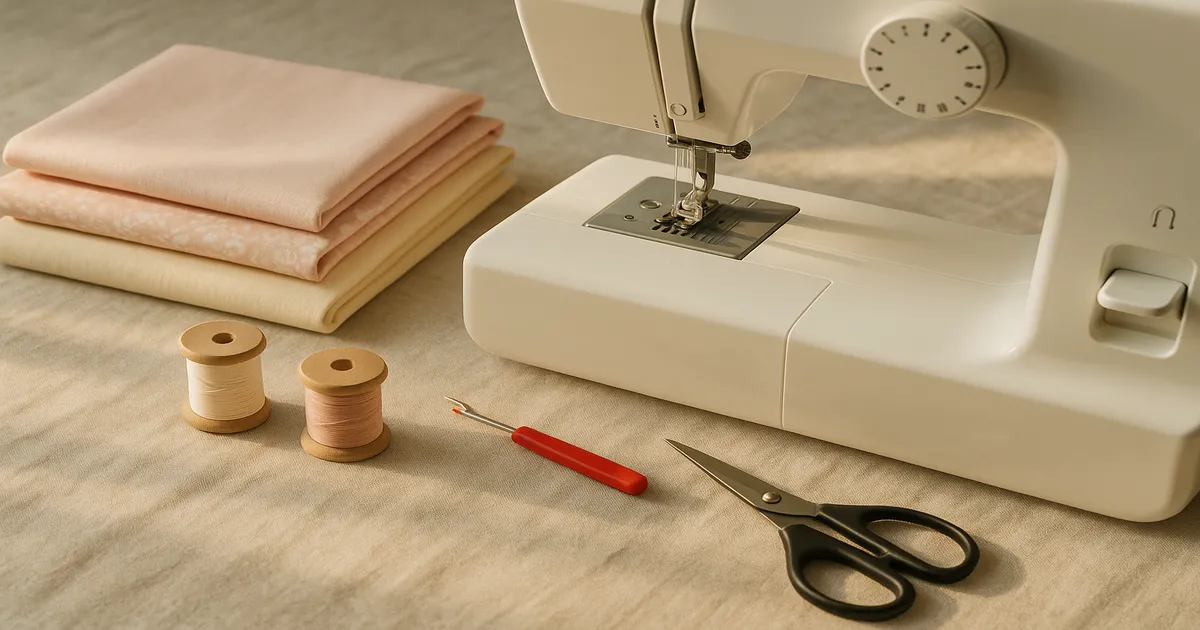
Thread: Stick with Gutermann , Coats & Clark, or Mettler. Cheap no-name thread breaks constantly, sheds lint that clogs your machine, and causes tension problems that’ll have you convinced something is seriously wrong. Start with neutrals — white, cream, black, gray, navy — and you’ll cover most beginner projects.
Cutting tools: A 45mm rotary cutter, an 18 × 24 inch (46 × 61cm) self-healing cutting mat, and a 6 × 24 inch (15 × 61cm) quilting ruler are faster and more accurate than scissors for almost everything. This trio is worth buying early.
Fabric scissors: Get a dedicated pair of 8–10 inch (20–25cm) fabric shears and never, ever use them on paper. Label them if you have to.
Seam ripper: Buy two . You’ll use them constantly and you’ll lose one.
Iron: Pressing seams isn’t optional. It’s what separates professional-looking results from homemade-looking ones. Any iron with a steam function works fine to start.
Practice fabric: 100% quilting cotton is stable, doesn’t stretch, presses beautifully, and is forgiving of imperfect stitching. Avoid knits, silks, and heavy denim until you have at least 10 hours of practice on wovens — those fabrics have their own quirks, and you want to separate learning-to-sew from learning-to-handle-difficult-fabric.
Three Habits That Will Make You a Better Sewist Immediately
Use needle-down mode. If your machine has it, turn it on and leave it on. When you stop sewing, the needle stays in the fabric — so you can pivot at corners, reposition, or take a break without losing your place. It sounds minor. It isn’t.
Start every seam on a scrap. Before feeding your project fabric under the presser foot, start sewing on a small folded scrap first, then slide your project fabric immediately behind it. This prevents the machine from eating the beginning of lightweight fabric and eliminates those infuriating thread nests at the start of seams.
Watch the seam guide, not the needle. The engraved lines on the throat plate are your guide — your eyes on them produce straight seams. Your eyes on the needle produce wobbly ones. If the lines are hard to see, put a strip of painter’s tape or washi tape at exactly 5/8 inches (16mm) from the needle. Instant improvement.
FAQ: Best Sewing Machine for Beginners
Is the Brother CS6000i really the best sewing machine for beginners, or is it just popular? It’s popular because it’s genuinely good — not the other way around. The combination of drop-in bobbin, automatic needle threader, extension table, and 25-year warranty at under $220 is hard to beat. That said, if you know you want simplicity over features, the Janome 2212 is the better machine for you specifically.
Can I learn to sew on a cheap $50–$80 machine? Technically yes, but I’d strongly advise against it. At that price point, internal components are almost always plastic, tension is inconsistent, and the machine will fight you in ways that are genuinely hard to diagnose as a beginner. You’ll blame your technique when it’s the equipment. Spend $150 minimum if you can.
Computerized vs. mechanical — which is better for a beginner? Neither is objectively better; it depends on how you learn. Computerized machines offer automatic settings and LCD guidance, which some beginners find reassuring. Mechanical machines have physical dials, fewer things to go wrong, and a more intuitive learning curve for people who prefer tactile feedback. If you’re unsure, go mechanical — you can always upgrade later.
How long does it take to learn to sew on a new machine? Most beginners can sew a straight, consistent seam within 2–3 hours of practice. A complete beginner project — a pillowcase, a tote bag — is realistic within the first weekend. The machine-specific learning (threading, tension, bobbin) takes maybe 30 minutes to get comfortable with on a quality machine.
What’s the first project I should make? A pillowcase. It’s a straight seam, it uses a useful amount of fabric so you get real practice, and you end up with something you’ll actually use. After that: a tote bag, then a simple elastic-waist skirt or pajama pants. Save anything with zippers, buttons, or fitted seams for after you have 10+ hours of practice.