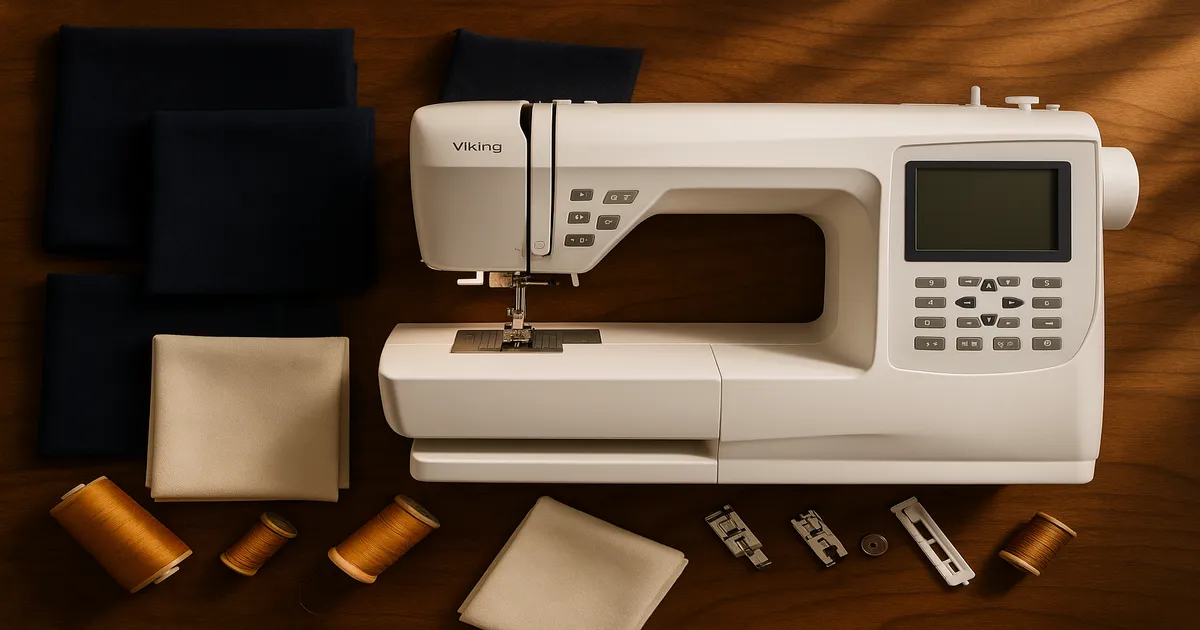
Quick Answer: Husqvarna Viking machines are genuinely excellent — but they’re a premium investment that only makes sense if you’ll actually use what you’re paying for. Prices run from around $300 for an entry-level Emerald up to $15,000+ for a Designer Epic 3, and the brand’s IDT integrated dual-feed system is one of the few proprietary features that’s truly worth the markup. Sew casually or you’re still building skills? There are smarter places to put that money.
If you’re asking “should I buy this Viking sewing machine?”, you’re probably standing in a dealer showroom feeling the pressure — or you’ve been eyeing a model online and can’t quite pull the trigger. Either way, the honest answer is: it depends entirely on what you sew, how often you sew it, and whether you’re ready to invest in the whole ecosystem, not just the machine.
Husqvarna Viking has been making sewing machines since 1872 in Huskvarna, Sweden. Today the brand sits under SVP Worldwide, the same parent company that owns Pfaff and Singer. That corporate context matters less than one practical reality: Vikings are dealer-only machines, and that shapes everything from how you buy them to how you get them serviced.
Should I Buy a Viking Sewing Machine? Start Here
Who Should Buy One
You’re a good candidate if you sew regularly — meaning several hours a week, not a few times a year — and you have a specific use case where the features will actually earn their keep. Quilters who want the IDT system on every stitch, garment sewists who prize consistency across difficult fabrics, and embroiderers who want a machine that grows with them will all find genuine value here.
You should also be someone who values the dealer relationship. Free classes, priority servicing, and troubleshooting support over a decade of ownership add up to real money. A great dealer nearby shifts the value calculation firmly in Viking’s favor.
Who Should Look Elsewhere
Budget-focused sewists, casual hobbyists, and anyone who sews two or three times a year will almost certainly overpay. A $1,200 Viking doesn’t sew a better straight stitch than a well-calibrated $400 Janome — it just does more things, most of which you might never use. If you can’t name three specific projects in the next twelve months where you’d genuinely use the features you’re paying for, step back.
Understanding the Viking Lineup: Emerald to Designer Epic
The naming system is actually pretty logical once you know it:
- Emerald ($300–$600): Entry-level, mechanical or lightly computerized. Solid for beginners and basic garment sewing.
- Opal / Sapphire ($700–$1,500): Mid-range computerized machines with more stitches, better feed systems, and expanded presser foot compatibility.
- Designer series ($3,000–$15,000+): Full embroidery capability, large hoop sizes, and the PREMIER+™ 2 software ecosystem. The Designer Epic 3 sits at the top.
The discontinued Tribute series is worth knowing if you’re shopping used — more on that below.
How Viking Compares to Bernina, Janome, and Baby Lock
Viking sits in a crowded premium tier. Bernina is its closest direct competitor — Swiss-made, slightly pricier, and with a stronger reputation for free-motion quilting via the BSR stitch regulator. Janome offers comparable stitch quality at 20–30% lower prices, which is genuinely hard to ignore. Baby Lock leans heavily into embroidery and serging. Viking’s real differentiator is the IDT system and a dealer network that invests in customer education.
How to Evaluate a Viking Sewing Machine Before You Buy
Step 1: Know Your Sewing Category
Before you walk into a dealer, know your primary use case. Quilters need throat space — look for at least 9 inches (23cm) from needle to machine body. Garment sewists should prioritize presser foot variety and feed dog control. Embroiderers need to evaluate hoop sizes and design library depth. If you’re sewing heavy fabrics regularly, confirm the machine accepts needles up to 110/18 or 120/19.
Step 2: Do Your Homework First
Don’t let the dealer drive the conversation until you’ve researched the specific model. Know the stitch count, throat space, and included accessories before you go. Entry models offer 30–80 stitches; top-tier models offer 500+ plus embroidery. That gap in features is a gap in price — make sure you actually need what’s on the expensive side.
Step 3: Visit an Authorized Dealer — And Bring Your Own Fabric
This is non-negotiable. You cannot properly evaluate a Viking from YouTube videos or spec sheets. Authorized dealers are listed at husqvarnaviking.com — verify before you go, because buying from an unauthorized seller voids your warranty and most dealers won’t service those machines.
Bring 6×6-inch (15×15cm) swatches of your real project fabrics:
- 4-layer cotton quilting sandwich with batting (simulates a quilt seam)
- Silk charmeuse or chiffon (tests fine fabric handling and presser foot pressure)
- Two layers of 14oz denim (tests motor power and feed consistency)
- Jersey knit at around 200gsm (tests stretch stitch capability)
Dealer demo fabric is always perfectly prepared — pre-washed, pressed, and cooperative. Your actual projects aren’t. The machine that glides through their cotton might chew up your slippery silk or stall on doubled denim.
Also bring 50-weight 100% cotton thread — Aurifil 50wt is my go-to for tension testing. Use neutral gray or tan so you can see loops clearly on both light and dark fabrics. Avoid polyester for this test; it has more stretch and can mask tension problems that cotton will expose.
Step 4: Evaluate Stitch Quality Critically
Hold your test seam up to the light. No loops should be visible on either face of the fabric. The stitch should be perfectly balanced — bobbin thread staying on the underside, top thread staying on top. On a 2.5mm straight stitch (roughly 10 stitches per inch), run your finger along the seam; it should feel completely uniform. Any bunching or inconsistency on a floor model is a red flag, not a “we can adjust that.”
Step 5: Test the Right Needles and Feet
Viking uses standard flat-shank needles, which means Schmetz and Organ needles work perfectly — a genuine plus over some competitors. Ask to test with a Universal 80/12 for general fabric, Denim 100/16 for your denim swatch, Microtex 70/10 for silk or chiffon, and Stretch 75/11 for jersey.
Test the 1/4-inch quilting foot, walking foot, free-motion foot, and the automatic 1-step buttonhole foot. Run the buttonhole at least three times — it should be identical every time. If it isn’t, that’s a problem.
Step 6: Ask the Right Questions About Dealer Support
Ask directly: “What’s included in the purchase price?” Good dealers bundle free classes, extended warranties, and sometimes 1–3 years of free servicing (worth $75–$150 per year). Ask about service turnaround time — if your nearest dealer is two hours away, factor in shipping costs for every service appointment. Some dealers offer 30-day return windows; ask about that too.
Step 7: Calculate the True Total Cost
The machine price is just the starting point:
- Presser feet: $15–$80 each; a useful starter set adds $150–$300
- PREMIER+™ 2 Embroidery Software: $500–$1,500 depending on edition
- Annual servicing: $75–$150 per year
- Proprietary bobbins: buy 10–20 extras at purchase
Common Mistakes Viking Buyers Make
Paying for features you’ll never use. Five hundred decorative stitches sounds impressive until you realize you’ve used the same seven for the past three years. The embroidery module adds $1,000–$3,000 to the cost — only worth it if embroidery is already a genuine part of your sewing life, not a “maybe someday” idea.
Buying from an unauthorized seller. A “deal” on eBay or Facebook Marketplace can leave you with a machine that no authorized dealer will touch under warranty. Always verify the seller at husqvarnaviking.com first.
Ignoring ergonomics. Sit at the machine for at least ten minutes and actually use it. Taller sewists sometimes find the knee lift lever awkward depending on table height. The touchscreen on high-end models requires clean, dry fingertips, which gets annoying mid-project. Confirm whether the specific model you’re considering uses a top-loading drop-in bobbin — most modern Vikings do, but don’t assume.
Skipping the warranty fine print. Viking’s standard warranty runs 2–5 years depending on model and dealer. Read the exclusions — feed dogs, bobbin cases, and other wear items are often not covered. Check whether the warranty is transferable if you ever sell the machine.
Features Worth Paying For (And When to Buy)
The IDT (Integrated Dual Feed) system is the real deal. It works like a walking foot on every single stitch, not just straight stitch — a meaningful advantage for quilters and anyone sewing plaids, stripes, or slippery fabrics. Needle-down position memory sounds minor until you’ve used it for a month and can’t imagine sewing without it. The automatic thread cutter on mid-to-high models is a genuine time-saver in production sewing — test it twenty times in a row at the dealer. It should never miss.
For timing, quilt shows and sewing expos are your best buying opportunities. Dealers routinely offer 10–20% below retail, and you can compare multiple dealers in one day. End-of-quarter timing (March, June, September, December) also brings dealer incentives. Always ask “What’s your best price?” — Viking dealers have more flexibility than big-box retailers. Bring your old machine; many dealers offer trade-in credit even for non-Viking machines.
Alternatives Worth Considering
Used Vikings: Best Models and What to Check
The Tribute 150C is the used Viking I’d point most people toward — widely available for $200–$400 and with a reputation for mechanical reliability that some newer models don’t match. The Designer I and Designer II from the 1990s–2000s are also beloved by experienced sewists.
When inspecting any used Viking: sew a straight stitch on test fabric and check for skipped stitches, run your finger across the feed dogs (they should feel sharp and grippy, not worn smooth), and ask for service history. A machine serviced within the last two years is a green flag. Walk away from any machine with cracked plastic housing — the internal damage is usually worse than it looks.
Bernina: Better for Serious Garment Sewists?
In my opinion, yes — if garment construction is your primary focus. The BSR stitch regulator is genuinely superior for free-motion quilting, and Bernina’s reputation for longer service intervals and more durable metal components is well-earned. The trade-off is price: Bernina typically runs 10–20% more than a comparable Viking, and the proprietary presser feet are expensive.
Janome: Comparable Quality, Lower Price
If the Viking price tag is making you wince, look seriously at Janome before you decide. The Janome MC9450QCP at around $1,800 competes directly with Vikings priced at $2,200–$2,500, and the stitch quality is genuinely comparable. Janome’s dealer network isn’t quite as strong in all markets, but the machines are reliable and the accessory ecosystem is robust.
Frequently Asked Questions
Should I buy a Viking sewing machine if I’m a beginner?
Probably not yet. The Emerald series is the entry point, but most beginners don’t need a Viking at all. Build your skills on a mid-range machine first, then upgrade when you know exactly what features you’re missing. If you’re set on the brand, the Emerald 118 or Emerald 122 let you experience Viking build quality without a four-figure commitment.
Are Husqvarna Viking sewing machines worth the money?
Yes — for the right sewist. If you sew regularly, have a clear use case that matches the machine’s features, and have access to a good authorized dealer, a Viking will serve you well for decades. If you sew occasionally or are still developing your skills, the premium over a mid-range Janome or Brother is hard to justify.
Can I buy a Viking sewing machine online?
You can find them listed online, but buying from an unauthorized seller voids your warranty and most dealers will refuse to service those machines. Some authorized dealers do sell online — just verify their status at husqvarnaviking.com before purchasing.
How long do Husqvarna Viking sewing machines last?
A well-maintained Viking should last 20–30 years. Many sewists still use Designer models from the 1990s daily. The keys are regular cleaning, needle changes every 8–10 hours of sewing, and professional servicing every 12–18 months. Keep the original box — shipping a Viking to a service center without proper packaging is asking for damage.
What’s the difference between Viking and Bernina?
Both are premium brands with strong dealer networks, but they differ in meaningful ways. Viking’s IDT dual-feed system works across all stitch types; Bernina’s BSR stitch regulator is superior for free-motion quilting. Bernina generally costs 10–20% more at comparable feature levels and has a reputation for longer service intervals. Viking tends to have a more accessible entry-level lineup. Honestly, the choice usually comes down to which dealer relationship you prefer.