Quick Answer: Getting good at sewing clothes means building six core skills — pattern reading, fabric selection, cutting, machine operation, pressing, and fitting — through deliberate, progressive practice. Most sewists complete 50–100 garments before construction starts to feel intuitive, so expect a steep early curve and give yourself the 1–2 years it actually takes. Progress is predictable if you follow a structured path.
Learning how to get good at sewing clothes is genuinely different from learning to quilt or sew home décor. Garments have to move with a human body, which introduces fitting variables that flat projects never require. The sewists who improve fastest aren’t necessarily the most talented — they’re the ones who practice deliberately, choose the right projects at the right time, and never skip pressing.
Phase 1 — Build Your Foundation (Garments 1–10)
Master Your Machine Before Touching Fashion Fabric
Before you cut into anything you actually care about, spend time on muslin or scrap cotton. The goal is a consistent 5/8-inch (16mm) seam allowance — the U.S. garment standard — without staring at the needle. Try sewing a grid of parallel lines spaced exactly 1/4 inch (6mm) apart; if you can do that reliably, your machine control is ready.
A few specifics that matter more than most beginners realize:
- Stitch length: 2.5mm for woven fabrics — strong without perforating the fabric excessively.
- Backstitching: 3–4 stitches back, then forward. Not 10 stitches, which creates a hard, bulky knot at every seam end.
- Starting and stopping: Begin 1/2 inch (13mm) from the fabric edge. This is where most beginners lose control and produce wobbly seams.
Learn to Press, Not Iron
Pressing is the single biggest quality differentiator between homemade-looking clothes and well-made ones. Ironing moves the iron back and forth; pressing lifts and places it with direct downward pressure. They’re not the same motion, and the difference shows in the finished garment.
Press every seam before it’s crossed by another seam — full stop. Get a tailor’s ham for curved seams: darts, princess seams, sleeve caps. Pressing a curved seam on a flat board distorts it, and no amount of careful stitching will fix that. For temperature, use roughly 400°F (204°C) for cotton, 300°F (149°C) for wool, 250°F (121°C) for silk, and 275°F (135°C) for polyester.
Choose Your First Five Projects Deliberately
Here’s the order I’d recommend, and why each one earns its place:
- Elastic-waist pajama or lounge pants — straight seams, a crotch curve, elastic application, no fitting complexity
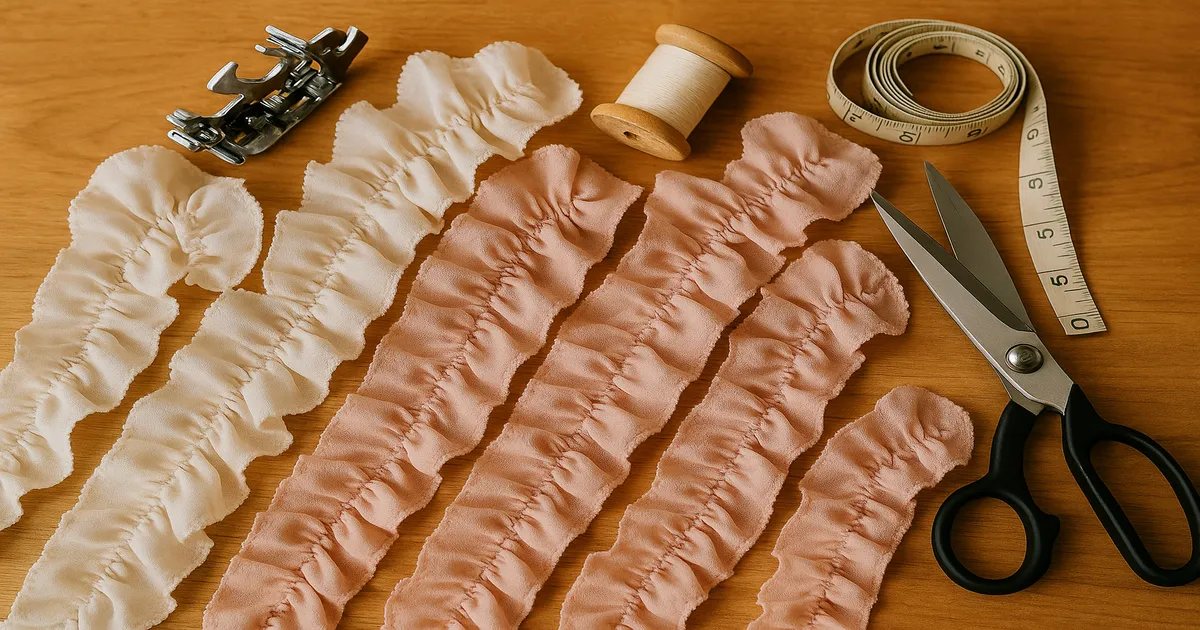
- A-line or gathered skirt — introduces waistbands or elastic casings and basic hemming
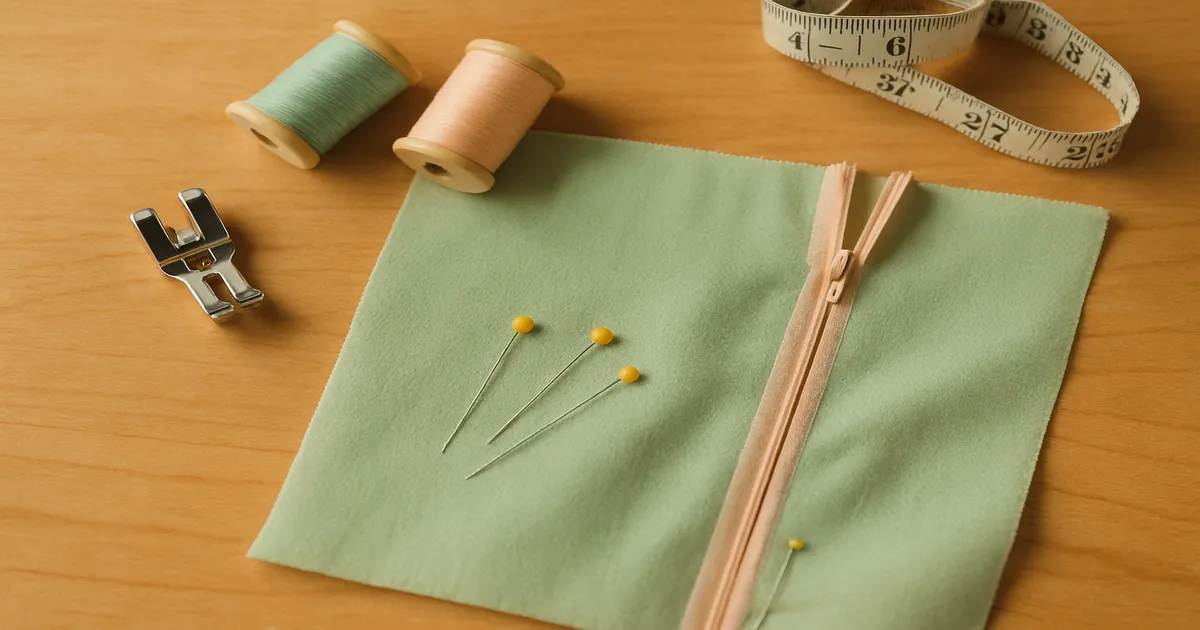
- Zippered pouch or unlined tote — builds topstitching precision and zipper confidence without any body-fit pressure
- Simple knit T-shirt or tank — introduces stretch fabric handling and neckline finishing
- Woven button-front shirt (beginner pattern) — collar construction, buttonholes, and sleeve setting all at once
Each project adds one or two new skills. Jumping ahead — say, starting with a tailored blazer — means you’re learning five new things simultaneously instead of one. That’s how people get frustrated and quit.
Phase 2 — Develop Fitting Skills (Garments 10–30)
How to Get Good at Sewing Clothes That Actually Fit
The Big 4 pattern companies (Simplicity, McCall’s, Butterick, Vogue) draft their patterns using measurements that haven’t been meaningfully updated since the 1950s and 60s. They’re drafted for a B-cup bust with specific hip-to-waist ratios that statistically fit a narrow slice of actual bodies. This isn’t a flaw you can sew around — it’s structural.
Independent pattern companies like Closet Core, Cashmerette, True Bias, and Grainline Studio have largely solved this with more contemporary sizing, inclusive fit ranges, and clearer instructions. If you’re frustrated with Big 4 fit, try an indie pattern before assuming the problem is you. It probably isn’t.
How to Make and Use a Muslin
A muslin is a test garment sewn from cheap fabric before you cut into anything expensive. Use 100% cotton muslin at 3–4 oz/sq yd — widely available for $2–4/yard and it behaves similarly to quilting cotton.
The process:
- Transfer all seamlines, notches, grain lines, and center front/back to the muslin with a fabric marker.
- Sew with a 3.5–4mm stitch length so seams rip out easily during fitting.
- Don’t finish the edges — it’s a test garment.
- Try it on right-side out, the way you’ll actually wear it, and pin adjustments while it’s on your body.
The Five Most Common Pattern Adjustments
Most fitting problems trace back to one of these:
- Full Bust Adjustment (FBA): For cup sizes above B — adds width and length to the front bodice, roughly 1/2 inch (13mm) per cup size above B.
- Sway back: Removes 1/2–1 inch (13–25mm) at the center back waist to eliminate horizontal wrinkles across the lower back.
- Shoulder width: Moved in or out in 1/4-inch (6mm) increments — surprisingly impactful on overall fit.
- Lengthening/shortening: Use the printed adjustment lines on the pattern; work in 1/4-inch (6mm) increments and check proportions after each change.
- Flat seat/sway hip: Removes or adds fabric at the back hip to eliminate diagonal drag lines.
Wearing Ease vs. Design Ease
Wearing ease is the minimum extra room built in for movement — typically 2–4 inches (5–10cm) at the bust on a fitted bodice. Design ease is intentional extra room for the silhouette — an oversized blouse might have 6–10 inches (15–25cm) at the bust.
The most common beginner mistake: sizing by the size chart without checking the finished garment measurements printed on the pattern envelope. Those two numbers are often very different. The finished measurement is the one that tells you how the garment will actually fit.
Phase 3 — Refine Your Technique (Garments 30–60+)
Seam Finishing Options, in Order of Skill Level
- Zigzag stitch: Width 3–4mm, length 2–2.5mm, along the raw edge. Works fine for most beginners.
- Serger/overlocker: A 3-thread overlock trims and overcasts in one pass — the professional standard for speed and durability.
- Hong Kong finish: Encase each seam allowance in a 1-inch (25mm) bias strip. Beautiful inside an unlined jacket. Slow, but worth it on the right garment.
- French seam: First seam at 3/8 inch (10mm) wrong sides together, trim to 1/8 inch (3mm), press, fold right sides together, stitch at 1/4 inch (6mm). Ideal for sheers and lightweight wovens.