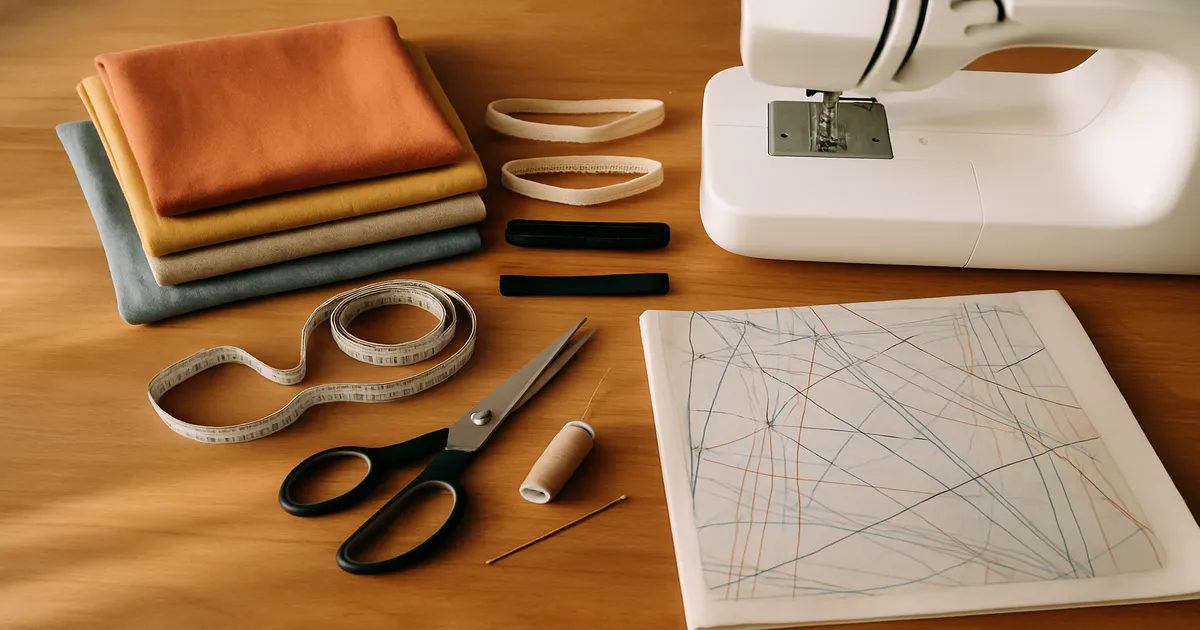
Quick Answer: To sew an elastic waistband, you’ll either thread elastic through a fabric casing (best for woven fabrics and beginners) or stitch elastic directly to a knit fabric edge (better for activewear). Cut your elastic 2–3 inches (5–7.5cm) shorter than your waist measurement, add 1 inch (2.5cm) for overlap, and use a bodkin to thread it through. That’s the core of it — everything else is just knowing which version fits your project.
Elastic waistbands are one of those techniques that looks intimidating until you’ve done it once, and then you wonder what the fuss was about. Learning how to sew an elastic waistband opens up a huge range of projects — pajama pants, pull-on skirts, kids’ shorts, yoga leggings — and once you understand why each step works, you can adapt it to almost anything. There are three methods worth knowing. I’ll walk you through all of them.
The Two Core Methods: Casing vs. Direct Application
Casing method: Sew a fabric tunnel at the waist, then thread pre-cut elastic through it. The elastic stays hidden inside and never gets topstitched directly to the fabric.
Direct-application method: Stitch the elastic straight onto the raw fabric edge, fold it to the inside, and topstitch through everything. No tunnel needed.
Use the casing method for woven fabrics — cotton, linen, denim — or if you’re newer to sewing. It’s forgiving, easy to adjust, and works beautifully for pajama pants, casual skirts, and children’s clothes.
Use the direct-application method for knits, activewear, and swimwear. It creates a lower-profile waistband that moves with the fabric, and it’s actually faster once you’ve done it a few times.
For both methods, 1-inch (25mm) to 2-inch (50mm) elastic is standard for adult waistbands. The non-negotiable rule: cut your elastic 2–3 inches (5–7.5cm) shorter than your actual waist measurement. That tension is what keeps the garment up.
Elastic Types and What You Actually Need
Woven, Braided, or Knit — Which Elastic?
| Elastic Type | Best Use | Width Range | Key Notes |
|---|---|---|---|
| Woven | Casing or direct application | ¼”–3” (6mm–76mm) | Stable width when stretched; can be topstitched |
| Braided | Casing only | ¼”–2” (6mm–50mm) | Narrows when stretched; never topstitch directly |
| Knit/No-roll | Direct application, wide waistbands | ¾”–3” (19mm–76mm) | Lies flat, won’t roll or fold |
| Fold-over (FOE) | Lingerie, children’s wear | 5/8”–1” (16mm–25mm) | Folds over raw edge; decorative finish |
The mistake I see most often: braided elastic in a direct-application situation. It narrows dramatically when stretched, rolls into a ridge, and digs into your skin. If you’re topstitching elastic to fabric, use woven or knit/no-roll. Full stop.
Fabric, Thread, and Needles
For the casing method, medium-weight wovens work best — quilting cotton, linen blends, lightweight canvas. For direct application, you need a knit with at least 25% stretch. Swimwear and activewear fabrics need chlorine-resistant sport elastic and polyester thread — cotton thread degrades with repeated washing and chlorine exposure.
Thread:
- All-purpose polyester (50wt) for most woven casings
- Wooly nylon in the bobbin when topstitching elastic on knits — it fills the zigzag and adds stretch recovery
Needles:
- Universal 80/12 for standard woven casings
- Stretch needle 75/11 or 90/14 whenever you’re sewing through elastic or knit — this eliminates most skipped-stitch problems
- Twin needle 4.0/75 for parallel topstitching on knits
Tools Worth Having
A bodkin is genuinely worth owning if you make pull-on garments with any regularity. It grips the elastic end securely and threads through the casing in a fraction of the time a safety pin takes. For narrow elastic, a large safety pin (size 2 or 3) works fine — but for anything over ½ inch (13mm), get the bodkin.
Other tools that actually matter:
- Walking foot — prevents layers from shifting when topstitching through elastic and multiple fabric layers
- Edgestitch foot — keeps topstitching lines perfectly consistent
- Fabric clips — better than pins for holding elastic to a raw knit edge without distorting the stretch
- Seam gauge — for measuring consistent fold widths when pressing the casing
How to Measure and Cut Elastic
Measure your waist (or hips, if the garment sits there) comfortably — snug, not breath-holding. Then subtract:
- Woven or knit elastic: 2–3 inches (5–7.5cm)
- Braided elastic: 3–4 inches (7.5–10cm), since it has less recovery strength
- Add 1 inch (2.5cm) for the overlap when joining ends
So a 32-inch (81cm) waist gets 29–30 inches (73.5–76cm) of elastic, plus the 1-inch overlap — meaning you cut 30–31 inches (76–79cm) total. I always cut on the longer end, join with a safety pin, try it on, and trim from there. You can’t add elastic back once it’s cut.
Casing width for 1-inch (25mm) elastic:
- Fold down ¼ inch (6mm), press
- Fold down another 1¼ inches (32mm), press
- Total fold = 1½ inches (38mm), giving you a 1¼-inch (32mm) channel with ¼ inch of ease
For a separate casing strip, cut the width at (elastic width × 2) + ½ inch (13mm) for seam allowances, and the length at the garment waist measurement + ½ inch (13mm) for the joining seam.
Method 1: The Fabric Casing (Best for Beginners)
Step 1: Sew and Press the Casing
If using a separate casing strip, join the short ends right sides together with a ¼-inch (6mm) seam and press it open. Fold the strip in half lengthwise, wrong sides together, and press. Pin the raw edges of the casing to the garment’s top raw edge, right sides together, matching the casing seam to a side seam. Stitch with a ⅜-inch (10mm) seam allowance.
Press the casing up, fold it to the inside, and topstitch close to the folded edge — leaving a 2-inch (5cm) opening at one side seam. That’s your elastic entry point.
Step 2: Insert the Elastic
Attach your bodkin to one end of the elastic. Before you do anything else, pin the other end to the garment right at the opening. This is the step everyone skips once and never skips again — if that trailing end disappears into the casing, you’re starting over. Feed the bodkin through the full circumference until both ends emerge from the opening.
Step 3: Join the Ends with a Box Stitch
Overlap the ends by 1 inch (2.5cm). Sew a box stitch: stitch a ½-inch (13mm) rectangle, then stitch diagonally corner to corner in both directions. That gives you eight lines of stitching through the overlap — it’s the strongest join and won’t pull apart in the wash.
Step 4: Close the Casing and Anchor the Elastic
Tuck the joined elastic back into the casing and distribute the gathers evenly around the waistband. Before stitching the opening closed, push the elastic away from the gap with your fingertip — you do not want to catch it in the closing stitches. Edgestitch the opening shut, backstitching at each end.
Then stitch in the ditch at both side seams and at center front and back. This anchors the elastic at four points and prevents it from twisting inside the casing over time. Small step, real difference.
Method 2: Direct-Application Elastic (For Knits and Activewear)
Only use woven or knit/no-roll elastic here. Never braided.
Step 1: Quarter-Mark and Join the Elastic
Cut your elastic, join the ends with a box stitch to form a loop, then divide the loop into four equal quarters and mark each with a fabric marker or pin. Do the same on the garment’s waist opening.
Step 2: Stitch Elastic to the Raw Edge
Match the quarter marks on the elastic to the quarter marks on the garment, pinning them right sides together with the elastic on top. The elastic will be shorter than the fabric opening — that’s intentional. You’re going to stretch it to fit as you sew.
Using a zigzag stitch (5mm width, 2.5mm length) or a 3-step zigzag, stitch the elastic to the raw edge. Stretch the elastic between pins as you sew, but let the feed dogs move the fabric — don’t pull the fabric itself. After stitching, trim the seam allowance to ¼ inch (6mm).
Step 3: Fold and Topstitch
Fold the elastic to the inside, rolling the fabric edge over so no raw edge shows. From the right side, topstitch through all layers while stretching as you sew. For wider elastic, stitch two or three rows: one at the top edge, one at the bottom, and optionally one in the center.
A twin needle (4.0/75 or 2.5/75) creates two parallel rows of topstitching on the right side with a zigzag underneath, so the stitching stretches with the fabric instead of popping. Pair it with wooly nylon in the bobbin. It’s the difference between a homemade look and a ready-to-wear finish.
Method 3: Casing with a Drawstring Channel
This is the casing method with one addition. After stitching the casing to the garment, add a second row of topstitching ¼ inch (6mm) below the first — do this before inserting the elastic, while everything is still flat. That creates a narrow upper channel for the drawstring and a lower channel for the elastic.
Use a seam ripper to open two small holes at center front between the two rows of stitching, or use a ⅜-inch (10mm) eyelet punch for a cleaner finish. Thread your drawstring cord through the upper channel, leaving equal lengths on each side. The elastic handles the fit; the drawstring is decorative (or for cinching).
Common Mistakes and How to Fix Them
Elastic too long or too short. Too long and the waistband sags. Too short and it digs in and distorts the fabric. Always cut long, test with a safety pin, then trim. You can’t add elastic back.
Casing too narrow to thread. The elastic bunches and fights you the whole way through. Add at least ¼ inch (6mm) of ease beyond the elastic width — ⅜ inch (10mm) if you’re newer to this.
Wrong elastic type. Braided elastic in a direct-application situation creates a rolling, uncomfortable ridge. Use woven or knit/no-roll whenever the elastic will be topstitched to fabric.
Catching the elastic when closing the casing. Push the elastic away from the gap with your fingertip and stitch slowly. If you catch it, the waistband will pucker permanently and the elastic won’t move freely.
Skipped stitches. Switch to a stretch needle (75/11) and slow down at the elastic overlap.
Twisted waistband. Almost always an off-grain casing. For wovens, cut the casing on the straight grain. For knits, align with the greatest stretch direction.
Pro Tips for a Perfect Elastic Waistband
Quarter-mark everything. Divide both the elastic and the garment opening into four equal quarters before you sew a single stitch. This one habit, more than anything else, is what separates even gathers from bunched, uneven ones.
Test fit before committing. Join the elastic with a safety pin, put the garment on, and actually move around. Sit down. Bend over. The elastic should feel snug but not restrictive. Adjust before you commit to the box stitch.
Elastic width by garment type:
- Adult pants and skirts: 1–2 inches (25–50mm)
- Children’s garments: ¾ inch (19mm)
- Lingerie with FOE: ¼–5/8 inch (6–16mm)
- Swimwear: chlorine-resistant sport elastic, same width range as adult pants
Care matters. Quality elastic should snap back to its original length after repeated stretching and washing. Cheap elastic goes limp fast — you’ll notice it after a handful of washes. It’s worth spending a little more on a name-brand elastic for garments you’ll wear regularly. Avoid high-heat drying, which degrades elastic faster than almost anything else.
Frequently Asked Questions
How much shorter should elastic be than my waist measurement?
Cut elastic 2–3 inches (5–7.5cm) shorter than your waist measurement for standard woven or knit elastic, then add 1 inch (2.5cm) for the overlap. For braided elastic, subtract 3–4 inches (7.5–10cm) since it has less recovery strength. When in doubt, cut longer, test with a safety pin, and trim down.
What’s the difference between braided and knit elastic for waistbands?
Braided elastic narrows significantly when stretched, which makes it unsuitable for direct application — it rolls, folds, and creates an uncomfortable ridge. Knit (no-roll) elastic maintains its width under tension and lies flat, making it the right choice whenever the elastic is topstitched directly to fabric. For a hidden casing, either type works, but knit elastic is generally more comfortable in wider widths.
How do you keep elastic from twisting inside a waistband casing?
Stitch in the ditch at both side seams and at center front and center back after inserting the elastic. This anchors it at four evenly spaced points and prevents rotation. Also check that your casing isn’t cut off-grain — a waistband that spirals when worn almost always traces back to that.
Can you sew an elastic waistband without a bodkin?
Yes — a large safety pin (size 2 or 3) works for narrow elastic. For anything wider than ½ inch (13mm), a safety pin becomes awkward and can pop open inside the casing. A bodkin is inexpensive and makes the job noticeably faster, so it’s worth adding to your kit if you make pull-on garments regularly.
How wide should the casing be for 1-inch elastic?
At least 1¼ inches (32mm) — that’s the elastic width plus ¼ inch (6mm) of ease. For beginners, 1⅜ inches (35mm) gives you a little more room to thread the elastic without it bunching or twisting. If the casing is too snug, the elastic will fight you the entire way through.