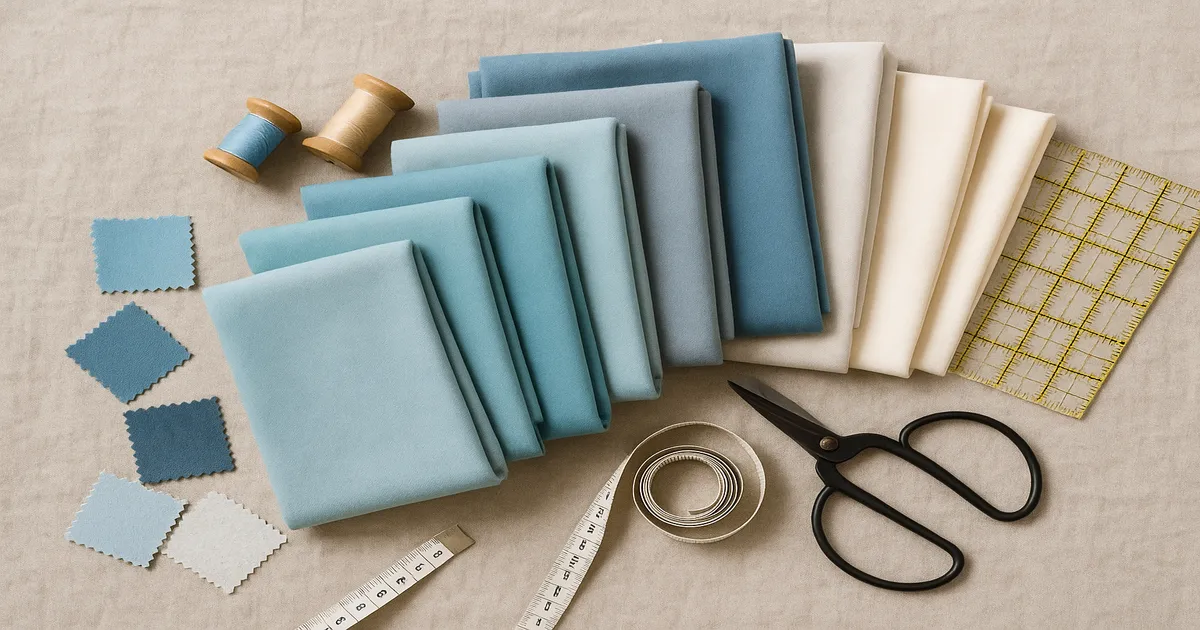
Quick Answer: Yes — there are plenty of affordable online fabric shops that ship internationally. Fabric.com, Mood Fabrics, The Fabric Store, Minerva, and many Etsy sellers all do it. The catch is that “affordable” fabric gets expensive fast once you add shipping, import duties, and currency conversion fees. Calculate your total landed cost before you order, every single time, and you’ll dodge the most common (and costly) surprise.
Finding online fabric shops that are affordable and ship internationally sounds straightforward until your “budget” haul arrives with a customs bill you weren’t expecting. The fabric itself might have been $4 a yard, but by the time it lands at your door you’re looking at $8–10 a yard once shipping, duties, and fees are stacked on top. This guide covers where to shop, what to watch for, and how to make international fabric orders actually worth it.
Quick Picks by Budget Tier
Under $5/yard:
- AliExpress (vet sellers carefully — more on this below)
- Fabric Wholesale Direct (US-based, ships internationally)
- Etsy remnant listings
- eBay fabric lots
$5–$15/yard:
- Fabric.com (US, frequent deep sales)
- The Fabric Store (NZ/AU/UK, excellent linen and silk)
- Mood Fabrics (US, wide selection)
- Minerva (UK, great for dressmaking fabrics)
$15+/yard — specialty and worth every cent:
- Liberty of London (Tana Lawn — genuinely irreplaceable)
- Merchant & Mills (UK, beautiful quality)
- Kokka and Nani Iro (Japan, unique prints)
- Korean double gauze specialists
- Spoonflower (print-on-demand, independent designer prints)
Etsy cuts across all tiers. You’ll find everything from $2 remnants to $30/yard Liberty prints, and many sellers have negotiated competitive international shipping rates through Etsy’s platform.
Understanding the True Cost of International Fabric Orders
The landed cost formula is: fabric price + international shipping + import duty + VAT/GST + currency conversion fees. Most beginners only think about the first two.
Here’s a real example. You find a gorgeous Japanese quilting cotton at $4/yard. You order 5 yards — $20. Shipping to the UK runs $18. Import duty at 12% adds $4.56. UK VAT at 20% then kicks in on the combined total (fabric + shipping + duty), adding another $8.51. That’s $51.07 for 5 yards — over $10/yard landed, before currency conversion. Ouch.
Use SimplyDuty.com to estimate duty rates for your destination country. General ranges:
- EU: 5–12% on woven fabrics
- US: 0–6.5% (most woven fabrics)
- Australia: 5–18% depending on fiber content
De Minimis Thresholds: When Customs Kicks In
Every country has a minimum import value below which customs duty isn’t charged:
- United States: $800 USD
- United Kingdom: £135
- EU: €150 (VAT applies from €1 since July 2021 — the old low-value exemption is gone)
- Canada: CAD $20 (yes, really — brutal)
- Australia: AUD $1,000
Canada’s threshold is the one that catches people off guard most often. A single order from a US shop can trigger duty and GST. Budget accordingly, or consolidate orders carefully.
Fabric Weight and Shipping Costs
Shipping is calculated by weight, and fabric is heavy. A yard of quilting cotton weighs roughly 4–6 oz (113–170g). A yard of upholstery fabric? 12–16 oz (340–453g). Order 5 yards of decorator fabric and you’re shipping close to 5 lbs (2.3kg) before packaging. That changes your math entirely.
Currency Conversion: The Quiet Percentage Drain
Your bank’s displayed exchange rate typically includes a 2–4% markup. On a $150 fabric order, that’s $3–6 quietly disappearing. Use a card with no foreign transaction fees — the Wise debit card, Revolut, or Chase Sapphire are solid options. The Wise app also shows real-time mid-market rates so you know exactly what you’re paying.
Best Affordable Online Fabric Shops That Ship Internationally
Budget Picks: Under $5 per Yard
AliExpress has genuinely good fabric sellers mixed in with a lot of garbage. The platform isn’t the problem — it’s the vetting. Stick to sellers with 500+ reviews, buyer photos, and detailed fiber content specs. It’s reliable for solid-color cotton, basic muslin for toiles, and polyester linings. Printed quilting cotton is a gamble unless a seller has specific, photo-verified reviews confirming color accuracy and hand feel.
Etsy remnant listings are an underrated gem. Many shops sell ½-yard (0.46m) to 2-yard (1.83m) offcuts at 30–50% off regular price — a low-risk way to sample a new shop before committing to yardage.
Mid-Range Picks: $5–$15 per Yard
Fabric.com is a workhorse. Huge selection, reliable descriptions, and frequent 40–50% off sales that push mid-range fabrics into budget territory. International shipping costs can be steep on heavy orders, so watch the weight.
The Fabric Store (New Zealand, with locations in Australia and the UK) is one of my favorites for linen and silk. Their descriptions are accurate, quality is consistent, and they clearly understand international customers. If you’re in the EU or Australia, ordering from their UK location can simplify the customs math considerably.
Minerva (UK) is excellent for dressmaking fabrics and ships widely. They list fabric width, weight, and fiber content clearly — which matters enormously when you’re buying remotely and can’t touch the fabric first.
Mood Fabrics (US) has a vast selection and ships internationally. Pricing varies wildly by fabric type, but their mid-range dressmaking fabrics are solid value and the descriptions are trustworthy.
Premium and Specialty Shops Worth the Splurge
Liberty of London’s Tana Lawn runs £16–20/meter. That’s expensive, full stop. But it’s also genuinely unavailable locally for most international buyers, and the quality is exceptional. If you’re making something that deserves it, the premium is justified.
Merchant & Mills (UK) is worth bookmarking for refined shirting and canvas fabrics. Not cheap, but beautifully curated and reliable.
Japanese and Korean Fabric Shops
Kokka and Nani Iro fabrics are the reason many international sewists get into fabric tourism in the first place — these prints simply aren’t available through generic retailers. Japanese fabric is typically sold in 10cm increments and comes 43–44 inches (109–112cm) wide, which is narrower than European fabric. Factor that into your yardage calculations.
Korean double gauze has a dedicated international following for good reason: the drape and softness are genuinely hard to replicate. Several Korean shops ship internationally through Etsy, which handles currency conversion cleanly.
Print-on-Demand Platforms
Spoonflower ships internationally from their US production facility and is the go-to for independent designer prints and custom fabric. Pricing is higher than mass-market fabric — $18–28/yard is typical — but you’re paying for small-run, unique designs. Their swatch program is excellent. Order a test swatch before committing to yardage.
How to Vet an International Fabric Shop Before You Buy
Confirm they actually ship to your country. “Ships internationally” sometimes means “ships to 12 countries, none of which are yours.” Find their shipping policy page and look for a country list or exclusion list. If it’s not clearly stated, email before ordering.
Read reviews that mention hand feel, color accuracy, and shrinkage — not just “great shop, fast shipping.” A review that says “softer than expected, true to the photo” tells you far more than a five-star rating with no text.
Check fabric specifications. Quality quilting cotton is typically 3–4 oz/yd² (100–135 g/m²) with a thread count of 60–80 threads per inch (24–31 per cm). Shirting runs lighter at 2.5–3.5 oz/yd² (85–120 g/m²). If a shop doesn’t list weight specs, that’s a yellow flag.
Order a swatch first. Most reputable shops offer swatches for $1–5, often refundable against your purchase. A $4 swatch that saves you from ordering 5 yards of fabric that photographs beautifully but feels like sandpaper is the best $4 you’ll spend. I’ve never regretted ordering a swatch. I have regretted skipping one.
Place a small test order before going big. Order ½–1 yard (0.46–0.91m) of two or three fabrics from a new shop before committing to 10 yards. Note the actual delivery time, measure the yardage when it arrives (don’t assume it’s accurate), and check color against the website photos in natural light.
Navigating Measurements, Customs, and Shipping Methods
Yards vs. Meters vs. 10cm Increments
- 1 yard = 36 inches = 0.914 meters
- 1 meter = 39.4 inches = 1.09 yards
- Japanese 10cm increment ≈ 4 inches
If a pattern calls for 2.5 yards (2.29m) and you’re ordering from a UK shop selling by the meter, order 2.5 meters. Don’t try to cut it exact — the margin is cheap insurance.
Also check fabric width. Japanese quilting cotton: 43–44 inches (109–112cm). US quilting cotton: 44–45 inches (112–114cm). European fabric: often 55–60 inches (140–152cm). Wider fabric means fewer yards needed for the same pattern.
Choosing a Shipping Method
- Economy (USPS First Class International, Royal Mail Economy): 2–8 weeks, cheapest, often no tracking. Fine for non-urgent orders under $50.
- Priority (DHL eCommerce, USPS Priority International): 6–21 days, basic tracking. Good middle ground.
- Express (DHL Express, FedEx International Priority): 2–5 days, full tracking, customs clearance support. For orders over $100, the customs support alone often justifies the extra cost.
Using Freight Forwarders
If a shop you want doesn’t ship to your country, freight forwarders like MyUS, Shipito, or Borderlinx give you a US, UK, or EU mailing address. They receive your package and forward it internationally — often saving 20–40% on heavy orders compared to direct international shipping. It adds a step, but for shops that are worth it, it’s completely workable.
Common Mistakes When Buying Fabric Internationally
Forgetting to calculate landed cost is the #1 error. Do the math first, every single time.
Confusing yards and meters catches people constantly. 1 meter is not 1 yard — it’s 9% more fabric, and that matters for both your budget and your pattern layout.
Splitting orders to stay under customs thresholds is customs fraud. Don’t do it. Seized goods and fines aren’t worth it.
Trusting fiber content claims on budget marketplaces without verification is how you end up with “100% cotton” that melts under your iron. Do a burn test: cotton burns cleanly with soft gray ash; polyester melts and beads; silk produces a crushable ash that smells faintly of hair.
Skipping pre-washing. Cotton shrinks 3–5%, linen up to 10% on the first wash. Always pre-wash before cutting.
Ordering too late for a deadline. Economy international shipping takes 2–8 weeks. Build in a buffer or pay for express.
Pro Tips for Getting the Most Value
Time your purchases around sales. UK and Australian shops often run end-of-financial-year sales in June/July. US shops go big for Black Friday and January clearance. Japanese shops discount around Golden Week (late April/early May). Sign up for mailing lists before you actually need fabric — sale announcements often go out 24–48 hours early.
Join a group order. Sewing communities on Facebook, Reddit’s r/sewing, and Discord regularly organize group orders to share shipping costs or hit free-shipping thresholds. If you can’t meet a bolt minimum alone, this is the answer.
Photograph everything on arrival — before pre-washing, before cutting. That’s your evidence if you need to file a dispute. Store each piece with a small card noting the shop, price in both currencies, fiber content, width, and wash results. Future you will be grateful.
Sewing Tips for Common Internationally Sourced Fabrics
| Fabric | Needle | Thread | Notes |
|---|---|---|---|
| Japanese quilting cotton | 80/12 universal | 50wt cotton | ¼-inch (6mm) seam allowance standard |
| Korean double gauze | 75/11 ballpoint | 50wt cotton or polyester | Serger strongly recommended; frays aggressively |
| European linen | 90/14 sharp/Microtex | 40wt linen or 50wt cotton | Damp press cloth, high heat |
| Silk from Asian suppliers | 65/9 sharp | 100wt silk or fine 60wt polyester | Tissue paper under fabric when stitching |
Frequently Asked Questions
Which online fabric shops offer the cheapest international shipping?
Etsy sellers often have the most competitive rates because many have negotiated through Etsy’s shipping partnerships. For US-based shops, Fabric.com and Mood Fabrics are reasonable, though costs climb quickly on heavy orders. If a shop doesn’t ship to your country directly, freight forwarders like MyUS or Shipito can cut costs significantly on larger hauls.
Do I have to pay customs duty when ordering fabric internationally?
It depends on your country’s de minimis threshold. In the US, that’s $800; in Australia, AUD $1,000; in the UK, £135; in the EU, €150 (though VAT applies from the first euro). Canada’s threshold is just CAD $20, so most international fabric orders will attract duty there. Always calculate duty into your landed cost before ordering.
How do I convert yards to meters when ordering from a UK or Australian shop?
1 yard = 0.914 meters; 1 meter = 1.09 yards. In practice: if a pattern calls for 3 yards (2.74m), order 3 meters to give yourself a safe margin. Also check fabric width — European fabric is often 55–60 inches (140–152cm) wide versus the US standard of 44–45 inches (112–114cm), which means you may need fewer meters than the pattern’s yardage suggests.
Is it safe to buy fabric on AliExpress?
It can be, with careful vetting. Stick to sellers with 500+ verified reviews, customer photos, and detailed fiber content listings. AliExpress works well for solid-color cotton, muslin, and polyester linings. It’s risky for printed quilting cotton or anything where accurate fiber content matters. Always do a burn test when the fabric arrives, and start small before buying in bulk.
What is a freight forwarder and can it save money on fabric orders?
A freight forwarder gives you a mailing address in another country — typically the US, UK, or EU — receives packages on your behalf, and ships them to your actual location. Services like MyUS, Shipito, and Borderlinx are popular options. For heavy fabric orders or shops that don’t ship internationally, freight forwarding can save 20–40% compared to direct international shipping, though you’ll need to factor in the forwarder’s handling fee.