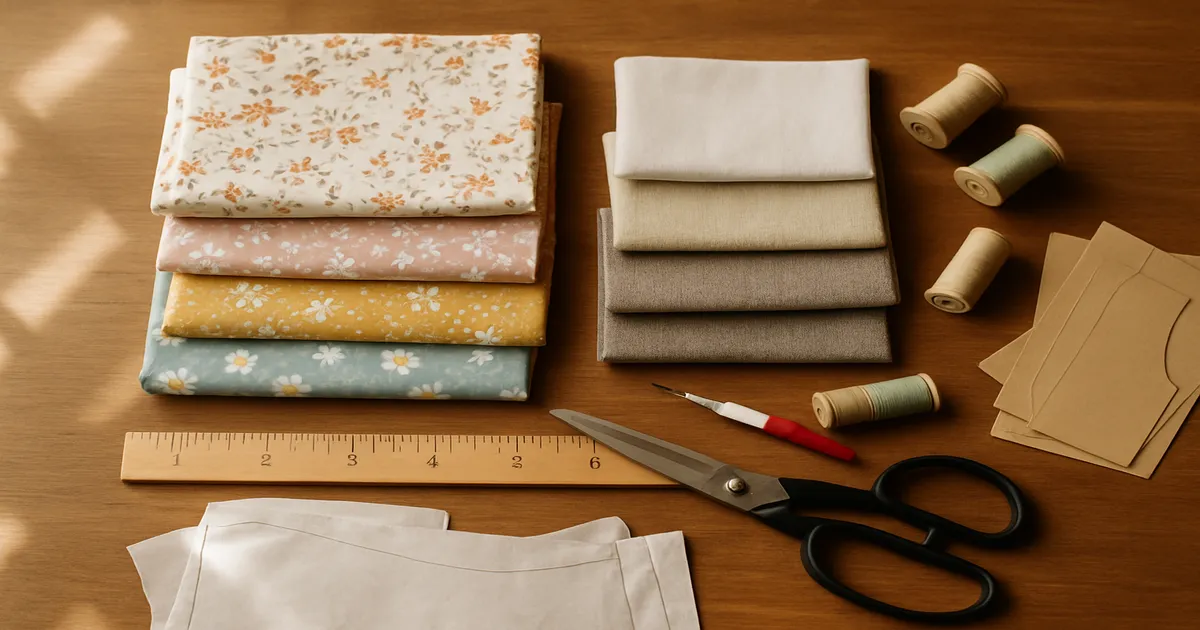
Quick Answer: To use fabric correctly, you need to identify your material, pre-wash it, cut on-grain, mark accurately, interface where needed, and sew with the right settings for that specific fabric type. Skip any of those steps and the project will fight you from the first cut to the last seam. Once these habits are locked in, they become second nature.
Figuring out how to use this fabric — whatever “this fabric” happens to be — is the question that sits behind almost every sewing problem. The blouse that puckers. The skirt hem that dips on one side. The knit top that looks fine on the hanger but twists on the body. In almost every case, the answer traces back to one of six steps: identify, pre-wash, lay out, mark, interface, and sew correctly. Let’s get into each one.
How to Use This Fabric: The Six Core Steps
Why Fabric Choice Makes or Breaks a Project
The number-one reason beginner projects fail isn’t skill — it’s fabric selection. A structured blazer cut in drapey jersey will collapse. A flowy blouse cut in stiff canvas will stand away from the body like a Halloween costume. Neither of those is fixable with better technique; it’s just the wrong material for the job.
Pattern envelopes list recommended fabrics for structural reasons, not aesthetic ones. When a pattern calls for “lightweight woven fabrics with drape,” that’s engineering guidance. Ignore it and you’re not being creative — you’re setting yourself up for a fight.
The six steps at a glance:
- Identify your fabric — fiber content, weight, and stretch
- Pre-wash in the same manner you’ll launder the finished item
- Lay out and cut on-grain with sharp tools
- Mark all pattern symbols on the wrong side
- Interface wherever structure is required
- Sew with the correct needle, stitch length, and thread
Step 1: How to Identify Your Fabric
Reading the Selvage and Bolt Label
The selvage — the tightly woven factory edge running parallel to the lengthwise grain — is one of the most useful things on a piece of fabric. Bolt-end labels list fiber content, care instructions, and fabric width. Photograph the label before you cut so you always have that information later.
How to Do a Burn Test at Home
Got an unlabeled fabric? A burn test is the most reliable way to identify it. Hold a small snippet over a fireproof surface with tweezers and bring a flame to the edge:
- Cotton and linen burn cleanly, smell like paper, and leave a soft grey ash that crumbles
- Wool and silk smolder, smell like burning hair, and leave a crushable ash
- Polyester and nylon melt at the flame’s edge, smell acrid, and leave a hard plastic bead
Blended fabrics will show characteristics of both fibers — a cotton-poly blend, for example, will burn and melt simultaneously.
Checking Drape and Stretch by Hand
Hold the fabric over your hand. Does it fall softly and flow, or does it hold its shape? That’s your drape check. Then pull on the crossgrain (perpendicular to the selvage). Woven fabrics have almost no give — 0–5% at most. Knits stretch at least 25–50%, and some stretch 100–150%. This single test tells you whether you’re working with a woven or a knit, which changes almost every decision you’ll make.
Understanding Fabric Weight (GSM)
GSM stands for grams per square metre. It affects needle choice, stitch length, and interfacing weight:
- Lightweight (30–90 GSM): chiffon, voile, lawn, silk charmeuse
- Medium-weight (90–180 GSM): quilting cotton, linen shirting, ponte knit
- Heavyweight (180+ GSM): denim, canvas, wool coating
Step 2: Pre-Wash and Prepare Your Fabric
Why Pre-Washing Is Non-Negotiable
Cotton can shrink 3–5% in the first wash. Linen can shrink up to 10%. If you cut and sew before pre-washing, your finished garment may come out a full size smaller after its first trip through the laundry. Always pre-wash the way you’ll care for the finished item — hot wash for everyday cotton, gentle cycle for wool, hand wash for silk.
Before throwing raw-cut fabric in the machine, finish those edges. A quick serge, a zigzag stitch, or a pass with pinking shears prevents the fabric from unraveling into a tangled mess. Washing in a mesh laundry bag also helps, especially for loosely woven fabrics.
Pressing Temperatures by Fiber Type
After washing, press the fabric before cutting — wrinkled fabric leads to inaccurate cuts:
- Cotton and linen: around 400°F (204°C), steam is fine
- Wool: around 300°F (149°C), always use a press cloth
- Synthetics: around 275°F (135°C) — go higher and you’ll melt the fibers
How to True the Grain
If the threads in your washed fabric aren’t running at perfect right angles, the fabric is off-grain. Pull firmly on the bias (the diagonal) in the opposite direction from the skew, working across the whole piece. It takes a minute. Cutting off-grain causes cascading problems that are nearly impossible to fix later.
Step 3: Lay Out and Cut Accurately
For most pattern layouts, fold the fabric in half lengthwise with right sides facing each other. This lets you cut mirror-image pieces simultaneously.
The grain line arrow on your pattern piece must run perfectly parallel to the selvage. Measure from both ends of the arrow to the selvage — those two measurements need to match within 1/8 inch (3mm). Even being 1/4 inch (6mm) off-grain on a long piece can cause a skirt hem to dip or a sleeve to twist forward on the arm.
Pattern weights are faster and more accurate than pins for most fabrics. If you’re using pins, use fine silk pins (0.5mm diameter) placed within the seam allowance so they don’t distort the cutting line.
Cut with sharp dressmaker’s shears using long, smooth strokes rather than short choppy snips. Paper scissors are not an option — they dull instantly on fabric and drag the weave. Get your shears professionally sharpened at least once a year.
For slippery fabrics: Silk charmeuse and satin will shift no matter how carefully you pin. Cut on a non-slip mat, or sandwich the fabric between sheets of tissue paper and cut through all layers. The tissue tears away cleanly afterward.
Step 4: Mark, Interface, and Prepare Pieces
Transfer every notch, dart, button placement, and fold line before the pattern piece comes off the fabric — always on the wrong side:
- Tailor’s chalk or chalk wheel — reliable on most wovens, brushes away cleanly
- Water-soluble marking pen — always test on a scrap first; some fabric finishes trap the ink permanently
- Tracing wheel and carbon paper — efficient for multiple layers, great for darts
On dark fabrics, white or yellow chalk shows up best. On delicate fabrics like silk, use chalk only — a tracing wheel can leave permanent impressions on some weaves.
When and How to Use Fusible Interfacing
Interfacing adds structure to collars, cuffs, waistbands, and button plackets. Match the interfacing weight to the fabric weight:
- Lightweight (20–30 GSM): voile, lawn, silk
- Medium-weight (40–60 GSM): quilting cotton, shirting
- Heavy (80+ GSM): coating, canvas, structured outerwear
To fuse correctly: use a damp press cloth, apply firm pressure, and hold for 10–15 seconds per section. Do not slide the iron — sliding shifts the interfacing before the adhesive sets and you’ll end up with bubbles.
Step 5: Sew With the Right Settings for Your Fabric
Needle and Stitch Length
This is the most overlooked variable in home sewing, and it causes more frustration than almost anything else. Replace your needle every 8–10 hours of sewing time, or at the start of every major project.
| Fabric Type | Needle Type | Size | Stitch Length |
|---|---|---|---|
| Lightweight wovens | Microtex/Sharp | 60/8–70/10 | 1.5–2mm |
| Medium-weight wovens | Universal | 80/12 | 2.5–3mm |
| Heavyweight wovens | Denim/Jeans | 90/14–100/16 | 3–3.5mm |
| Knits | Ballpoint or Stretch | 75/11–90/14 | 3–4mm stretch stitch |
| Leather/faux leather | Leather | 80/12–100/16 | 3–3.5mm |
Thread and Presser Feet
Polyester all-purpose thread (40-weight) handles most sewing tasks reliably. For fine fabrics, use 50-weight. For visible topstitching, use 28-weight or bold 12-weight thread in the needle with regular thread in the bobbin.
A walking foot is worth owning if you sew any knits, plaids, or stripes — it feeds top and bottom layers at the same rate, which prevents the shifting that causes mismatched plaids and stretched knit seams. For vinyl or leather, a Teflon foot or roller foot stops the material from sticking.
Seam Finishes and Hem Methods
| Fabric | Seam Finish | Hem Method |
|---|---|---|
| Quilting cotton | Pressed open or serged | Topstitched 1/4 inch (6mm) |
| Jersey knit | Serged or zigzag | Coverstitch or twin needle |
| Denim | Flat-felled seam | Topstitched double-fold |
| Silk charmeuse | French seam | Hand-rolled hem |
| Wool suiting | Pressed open, edge-stitched | Catch-stitched by hand |
| Linen | Serged or Hong Kong finish | Blind hem or topstitched |
Common Mistakes (And How to Avoid Them)
Skipping the pre-wash. The finished item shrinks unevenly after the first launder. This is not recoverable. Pre-wash every time.
Ignoring the grain line. A quarter-inch off-grain at the top of a skirt panel becomes a visible hem dip by the bottom. Measure both ends of the grain line arrow to the selvage. It takes 30 seconds.
Using the wrong needle — or a dull one. A universal needle on a knit causes skipped stitches because the sharp point pushes through the loops instead of sliding between them. A ballpoint on woven silk snags the weave. Match needle to fabric, and replace it more often than you think you need to.
Ironing instead of pressing. Ironing means sliding the iron back and forth. Pressing means lifting, placing, holding with firm pressure, and lifting again. Sliding distorts bias-cut pieces and stretches seams out of shape. Press every seam before crossing it with another — this single habit is the biggest visible difference between amateur and professional results. A wooden tailor’s clapper traps steam in the fabric after pressing and sets the crease faster and sharper than the iron alone.
Not testing on a scrap first. Sew a 4-inch (10cm) test seam on a double layer of your actual fabric before starting the project. Check stitch length, tension, and needle choice. Two minutes now saves you from discovering a problem on the garment itself.
Fabric Recommendations by Skill Level
Beginners: Start with 100% quilting cotton. It’s stable, presses beautifully, doesn’t fray aggressively, and forgives mistakes. Pre-cut fat quarters (18×22 inches / 46×56cm) eliminate the intimidation of cutting from a full bolt.
Intermediate: Linen rewards you with gorgeous drape and durability, but it frays more and needs careful pre-washing. Ponte knit is the ideal entry-point knit — stable enough to behave almost like a woven.
Advanced: Silk charmeuse demands a Microtex 60/8 needle, tissue paper under the presser foot, and French seams. Wool coating requires a tailor’s ham, hand-catch-stitched hems, and patience. Bias cutting — slicing fabric at 45 degrees to the grain — creates maximum drape and is used in bias-cut gowns and binding, but it requires precise technique and considerably more yardage than straight-grain cutting.
Frequently Asked Questions
Can I use any fabric for any sewing pattern?
No. Pattern envelopes specify fabric type, drape, and stretch requirements that are structural, not decorative. A pattern designed for woven fabrics won’t work in a knit without significant adjustments, and vice versa. If you want to substitute, choose a fabric with the same drape, weight, and stretch characteristics as what’s recommended.
Do I really need to pre-wash fabric before cutting?
Yes, without exception. Cotton shrinks 3–5% and linen up to 10% in the first wash. Skipping pre-washing means your finished item may shrink or distort the first time it’s laundered — and there’s no fixing it after the fact.
What happens if I cut fabric off-grain?
The garment will twist, pull, or drape unevenly. Even being 1/4 inch (6mm) off-grain on a long pattern piece can cause a visible hem dip or a sleeve that twists forward on the arm. Off-grain errors can’t be corrected after sewing — they have to be prevented at the cutting stage.
How do I know which sewing needle to use?
Match needle type to fabric construction (Universal for wovens, Ballpoint or Stretch for knits, Microtex for tightly woven or delicate fabrics, Denim for heavy wovens) and needle size to fabric weight (60/8–70/10 for lightweight, 80/12 for medium, 90/14–100/16 for heavy). Replace your needle every 8–10 hours of sewing or at the start of each major project.
What’s the difference between clipping and notching curved seams?
They do opposite things. Clipping — straight cuts into the seam allowance every 1/2–3/4 inch (13–19mm) — is used on concave (inward) curves so the seam can spread and lie flat. Notching — small triangular cuts — is used on convex (outward) curves so the excess seam allowance can compress without bunching. Using the wrong one on the wrong curve will cause the seam to pucker instead of lying flat.