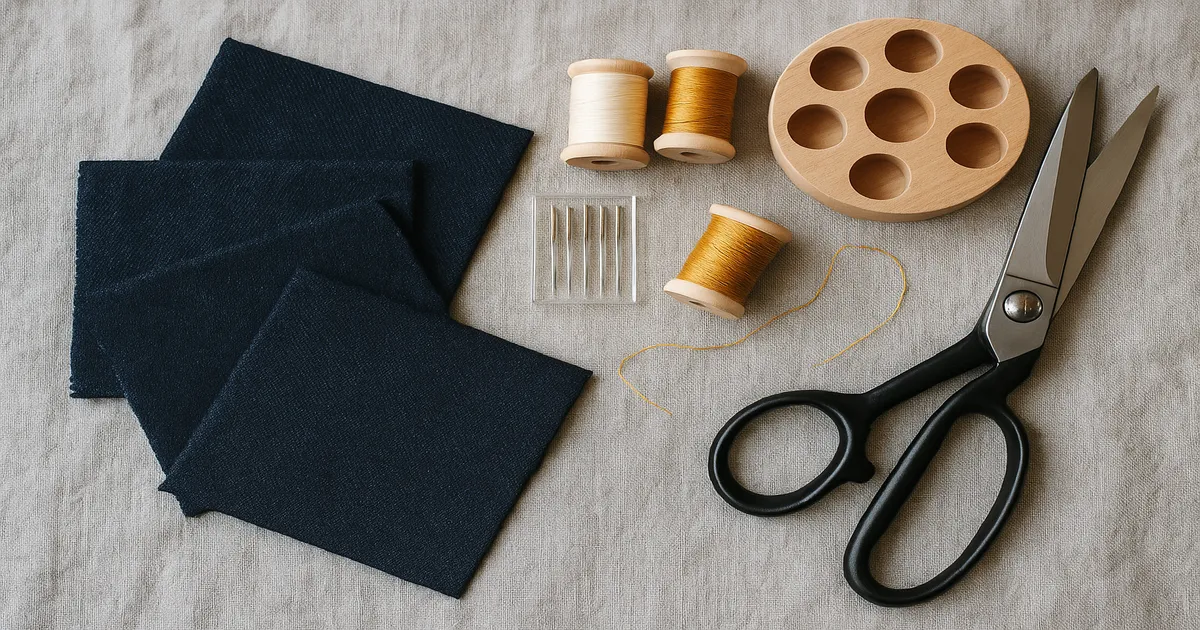
Quick Answer: Pre-wash your denim twice before cutting, use a size 16 denim needle with weight-40 polyester thread, and set your stitch length to 3.0–3.5mm. Sew slowly, press every seam as you go, and use a hump jumper at thick intersections. Denim rewards preparation and the right tools — not speed.
Learning how to sew denim properly is one of those skills that separates clothes that last from clothes that fall apart at the first wash. Jeans, jackets, bags, skirts — denim is everywhere, and it’s genuinely satisfying to make. But the fabric has a well-earned reputation for eating needles and skipping stitches, and that reputation holds when you go in without the right setup. The good news: most denim problems are completely preventable.
Understanding Denim Fabric
What Makes Denim Different
Denim is a twill-woven cotton fabric — threads interlock in a diagonal pattern rather than a simple over-under grid. That diagonal structure gives denim its characteristic ribbing and its strength. Traditional denim is dyed with indigo only on the warp (lengthwise) threads, while the weft threads stay white. That’s exactly why denim fades the way it does: wear strips away the surface indigo and reveals the white underneath.
That tight twill weave is also what’s hard on needles. A universal needle deflects slightly as it hits the fabric; a denim needle is engineered to punch straight through.
Denim Weight: Which Oz Is Right for Your Project
Denim weight is measured in ounces per square yard (oz/yd²), and it matters more than most people realize:
| Weight | Oz/yd² | Best For |
|---|---|---|
| Lightweight | 4–6 oz | Shirts, dresses, chambray-style garments |
| Mid-weight | 8–10 oz | Jackets, skirts, casual pants — best for beginners |
| Heavyweight | 12–16 oz | Traditional jeans, structured bags |
| Selvedge | 14–21 oz | Premium jeans; needs a powerful machine |
Mid-weight (8–10 oz) is where I’d tell anyone to start. It’s stiff enough to behave well but won’t fight your machine every inch of the way.
Stretch Denim vs. Rigid Denim
Modern denim often contains 1–3% elastane for a fitted, comfortable stretch. That small percentage changes your needle choice: rigid denim gets a standard denim needle, but stretch denim blends need a stretch or stretch-denim combo needle to prevent skipped stitches along the grain. Handle stretch denim more gently when cutting, too — it distorts easily if you’re not careful.
One more thing worth knowing: the right side of denim is darker, smoother, and shows twill lines running from lower-left to upper-right. The wrong side is lighter and rougher. Mark the wrong side of every piece with tailor’s chalk as soon as you cut. Under certain lighting, denim can look deceptively similar on both sides, and mixing them up is an easy mistake that’s annoying to fix mid-project.
Tools You Need to Sew Denim
Choosing the Right Needle
This is the single most impactful tool choice you’ll make. A denim needle has a reinforced shaft and a sharp, slightly wedge-shaped point that pierces tightly woven fabric cleanly instead of pushing threads aside.
- Size 16/100 denim needle — standard choice for 8–12 oz denim
- Size 18/110 — for 12 oz and heavier
- Stretch needle, size 14/90 — for elastane blends
- Topstitching needle, size 16/100 — larger eye for heavier topstitching thread
My rule of thumb: if you hear a popping sound when the needle enters the fabric, it’s dull. Change it immediately — don’t wait for it to break. A fresh needle costs almost nothing; re-sewing a seam costs time and frustration. Change it at the start of every project, not just when something goes wrong.
Thread for Seams and Topstitching
Use weight-40 polyester thread for construction seams. Polyester has more tensile strength than cotton and a slight built-in stretch, which matters on seams that take real stress. Gutermann Mara 70 and Coats & Clark Dual Duty XP are both reliable choices.
For topstitching, step up to weight-30 or dedicated topstitching thread like Gutermann Topstitch . The classic jeans look uses gold/amber thread — Gutermann color 968 is a close match to vintage Levi’s. Standard weight-50 all-purpose thread looks thin and disappears on denim. Don’t use it for anything visible.
Presser Feet and Notions
You don’t need a huge collection of feet, but a few make a real difference:
- Zipper foot — non-negotiable for fly-front zippers
- Edge-stitch or topstitching foot — center guide blade keeps parallel lines honest
- Roller foot or Teflon foot — helps denim feed evenly without dragging
- Walking foot — great for multiple layers in bags or quilts
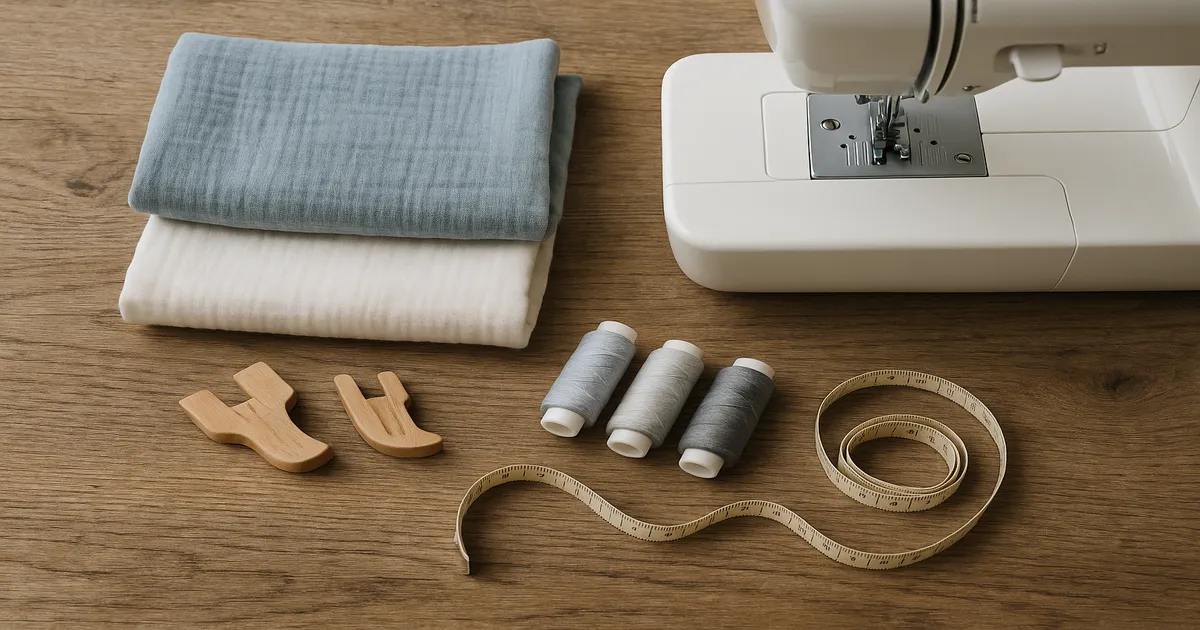
- Hump jumper (Jean-a-ma-jig) — not a foot, but treat it like one. It’s a small plastic wedge that levels the presser foot over thick seam intersections. Without it, your foot tips forward and the first several stitches skip. It’s a $5 tool that solves a $50 problem.
For jeans specifically: copper rivets (9mm or 11mm) for pocket corners, 17mm shank jeans buttons, and a YKK #5 metal zipper for the fly. Metal zippers hold up to denim stress in a way plastic ones simply don’t.
Machine Considerations
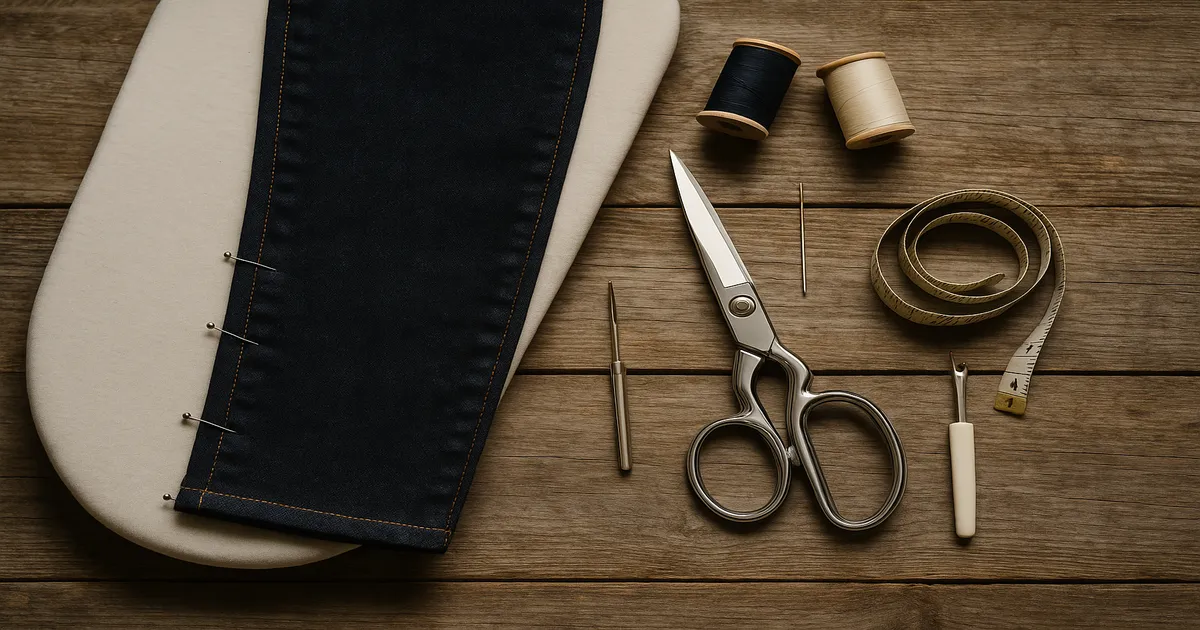
Mid-weight denim is fine on a quality mechanical machine like the Singer Heavy Duty 4452 or Brother CS7000X. Heavyweight denim (12 oz+) really benefits from a semi-industrial machine. A good steam iron and a wooden clapper block are also genuinely essential — not optional extras. The clapper especially earns its keep on flat-felled seams.
Preparing Your Denim Before You Sew
Skipping pre-washing is the most common beginner mistake, and it’s a project-ruining one. Denim can shrink 3–10% in the first wash — sometimes more with raw or unwashed fabric. Wash in hot water, dry on high heat, and run it through the cycle twice before you cut a single piece.
After washing, the fabric will be wrinkled and slightly stiff. That’s normal. Press it flat before doing anything else, using a hot iron at the cotton setting with full steam.
When you’re ready to cut: identify the grain line using the selvage edge — it runs parallel to the warp (lengthwise grain). Denim also has a directional sheen, so cut all your pattern pieces in the same direction. Mixing directions creates subtle color variation that looks like a mistake in the finished garment, because it is.
For anything 12 oz and heavier, cut in a single layer. Folded heavyweight denim is hard to cut accurately and kills your blades faster. Use tailor’s chalk or a chalk wheel for marking — wax-based markers can leave permanent stains. Cut notches outward (away from the seam allowance), not inward. Denim frays aggressively, and inward notches can eat into your seam allowance before you even get to the machine.
How to Sew Denim: Step by Step
Machine Setup
Before you touch your project pieces:
- Install the correct needle (size 16 denim for most projects).
- Thread with weight-40 polyester.
- Set stitch length to 3.0–3.5mm.
- Reduce presser foot pressure if your machine allows it.
- Test on a folded scrap of your actual denim — not a different fabric, not a thinner piece.
That last step is the one people skip. Don’t. Denim varies significantly between brands and weights, and your settings need to match what you’re actually sewing.
Sewing Seams
Use a 5/8-inch (16mm) seam allowance for garments. Backstitch 3–4 stitches at the start and end of every seam — denim seams are under real stress and need to be locked. Sew slowly; speed generates heat, which causes the needle to deflect and thread to shred. If your machine has a speed limiter, set it to 50–60%.
At thick seam intersections — the crotch curve on jeans, side seams on a jacket — you can be sewing through 8–12 layers of denim. Place your hump jumper behind the presser foot to level it as you approach the bulk, then use the hand wheel to lower the needle through the thickest part one stitch at a time. Never force the fabric. Let the feed dogs do the work.
Finishing Seams
Flat-felled seams are the traditional denim finish — they encase the raw edge and add structural strength:
- Sew the seam with a 3/4-inch (19mm) seam allowance.
- Trim one seam allowance to 1/4 inch (6mm).
- Fold the wider allowance over the trimmed one and press flat.
- Topstitch 1/8 inch (3mm) from the folded edge.
Serged edges work well for lighter denim on less-stressed seams. French seams are only appropriate for under-6-oz fabric — on anything heavier, they create a ridge of bulk that shows through the garment.
Topstitching
Switch to your topstitching needle and weight-30 thread. Set stitch length to 3.5–4.0mm — this mimics ready-to-wear denim and is easier to sew evenly than shorter stitches. Mark your topstitching lines with a Hera marker before you sew. Eyeballing parallel lines on denim always results in wobble. Sew both rows of double topstitching in the same direction, spaced 1/4 inch (6mm) apart. A twin needle (size 4.0/100) lets you sew both rows simultaneously if your machine supports it.
If your topstitching thread keeps breaking, try threading the needle with two strands of regular weight-40 thread instead of one strand of topstitching thread. It sounds odd, but it works — the two strands read visually as one heavier line and snap less.
Hemming
Mark the hem with the garment on — denim hems are unforgiving of guesswork. A standard approach is a 1-inch (25mm) double-fold hem, or a 1.5-inch (38mm) single fold with a serged edge. Topstitch at 1/4 inch (6mm) from the fold using topstitching thread.
For the vintage spiral-fade look of a chain-stitch hem, you’d need a Union Special 43200G or a coverstitch machine. For most people, it’s worth finding a tailor who has one rather than chasing that particular rabbit.
Common Mistakes When Sewing Denim
Using a universal needle. This is probably the top cause of skipped stitches. The needle deflects instead of piercing cleanly. Always use a denim needle, and change it at the start of every project.
Skipping the pre-wash. Cutting and sewing before washing is a gamble you’ll lose. Shrinkage happens, and it’s not subtle.
Sewing too fast. Speed is the enemy of clean denim stitching. Slow down, especially through thick areas.
Not pressing as you go. Unpressed denim seams create bulk that compounds with every subsequent step. By the time you’re sewing the waistband, you’re fighting a mountain of wrinkled fabric that could have been flat the whole time. Press every seam. After steaming, place a wooden clapper on it and hold firm pressure for 10–15 seconds — the wood absorbs the steam and sets the seam flatter than the iron alone ever could.
Frequently Asked Questions About Sewing Denim
What needle should I use to sew denim?
A Schmetz Jeans/Denim needle in size 16/100 for most projects (8–12 oz). For heavyweight denim (12 oz+), move up to size 18/110. If your denim contains elastane, use a stretch or stretch-denim combo needle. Change the needle at the start of every project — a dull needle is the leading cause of skipped stitches on denim.
Can I sew denim with a regular sewing machine?
Yes, for mid-weight denim (8–10 oz). A quality mechanical machine with a strong motor handles it well with the right needle and thread. Heavyweight denim (12 oz+) is harder on home machines and benefits from a semi-industrial model. Honestly, the machine matters less than the needle, thread, and settings.
Why does my machine skip stitches when sewing denim?
Usually one of three things: a dull or wrong-type needle, a presser foot tipping forward over a thick seam intersection, or sewing too fast. Replace your needle with a fresh denim needle, use a hump jumper at seam intersections, and slow down. Also check that the needle is fully lowered into the fabric before you press the foot pedal.
Do I need to wash denim before sewing?
Always. Denim can shrink 3–10% in the first wash, sometimes more with raw fabric. If you skip pre-washing, your finished garment will shrink and distort the first time it goes through the laundry. Wash in hot water, dry on high heat, and run it through twice before cutting.
What’s the best thread for sewing denim?
Weight-40 polyester for construction seams — Gutermann Mara 70 and Coats & Clark Dual Duty XP are both solid. For visible topstitching, use weight-30 topstitching thread for a bold, professional result. Avoid cotton thread (not strong enough) and weight-50 all-purpose thread (too fine and it’ll look wimpy on denim).