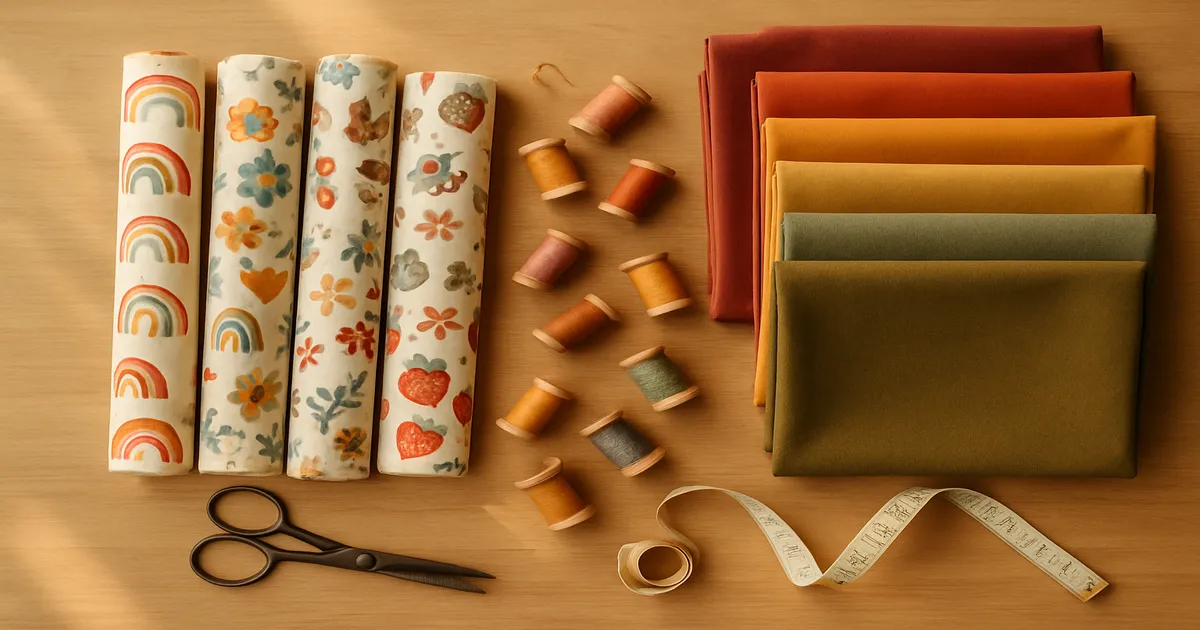
Quick Answer: The best places to buy novelty fabric online are Spoonflower (for unique and custom prints), independent quilt shops, JOANN online, Etsy, and authorized licensed fabric retailers. Spoonflower runs $18–$32/yard; wholesale suppliers can get you down to $3–$8/yard. Order swatches before committing to large cuts, and always add extra yardage for large-scale or directional prints.
If you’ve ever tried to find fabric printed with axolotls wearing party hats — or even just a decent Halloween print in March — you already know that local stores rarely cut it. Knowing where to buy novelty fabric online opens up a genuinely different world: thousands of prints, independent designers, custom colorways, and micro-niche themes that no brick-and-mortar shop could ever stock. The trick is knowing which retailer to use for which situation, and avoiding a few expensive mistakes along the way.
Where to Buy Novelty Fabric Online: Top Retailers at a Glance
| Retailer | Best For | Price Per Yard |
|---|---|---|
| Spoonflower | Unique, custom, indie designer prints | $18–$32 |
| Independent quilt shops | Curated collections, quality quilting cotton | $12–$18 |
| JOANN / Fabric.com | Budget projects, seasonal prints | $5–$15 |
| Etsy sellers | Vintage, deadstock, one-of-a-kind | $8–$25 |
| Licensed retailers (Sykel, Springs Creative) | Official character fabric | $10–$20 |
| Wholesale suppliers (Fabric Wholesale Direct) | Bulk orders, quilt backings, costumes | $3–$8 |
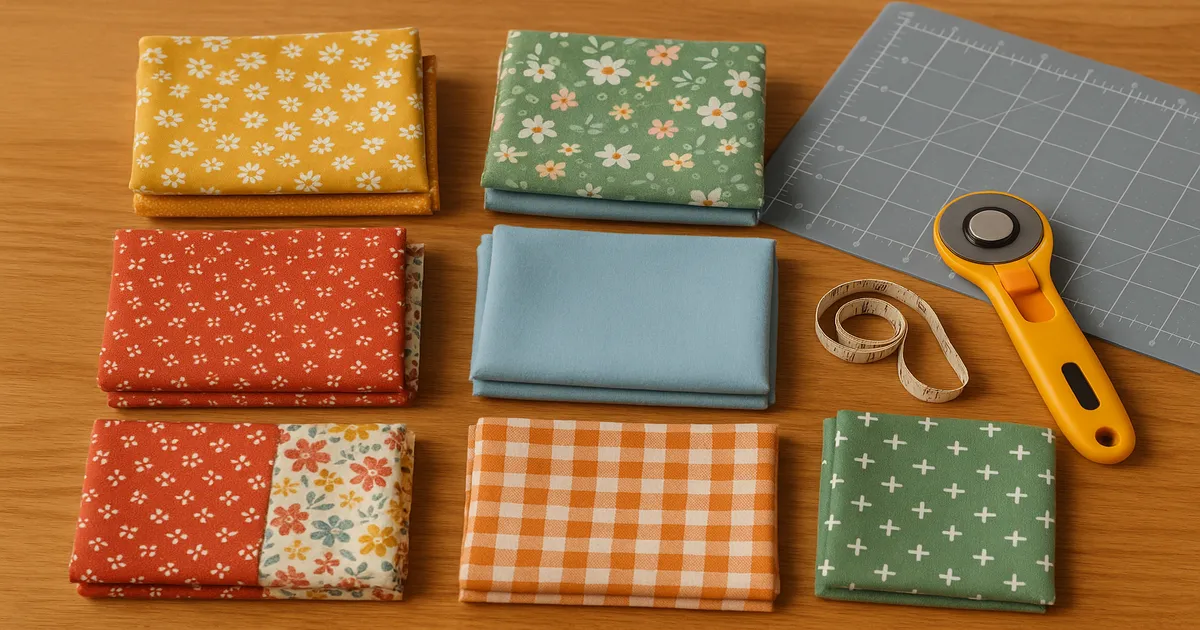
What makes novelty fabric different? Novelty fabric — sometimes called a “conversation print” — is any textile where the print itself is the point. Dinosaurs, donuts, vintage space rockets, specific dog breeds, licensed characters: the design tells a story rather than just providing texture or color. Scale, direction, and color accuracy all matter far more here than they do with a blender or solid.
Types of Novelty Fabric: Know What You’re Shopping For
Quilting Cotton
The vast majority of novelty prints are quilting cotton — 44–45 inches (112–114cm) wide, lightweight at around 3–4 oz per square yard. It presses beautifully, pieces well, and is what most online shops carry. When a listing says “novelty fabric” without further detail, it’s almost certainly quilting cotton.
Other Fabric Types Worth Hunting For
Novelty prints also show up in:
- Knit/jersey: 58–60 inches (147–152cm) wide, with stretch — great for kids’ garments
- Canvas or home dec weight: 54–60 inches (137–152cm) wide, 7–12 oz — ideal for bags, pillows, table runners
- Minky/fleece: 58–60 inches (147–152cm) wide, plush pile — the go-to for baby blankets and loveys
- Linen blends: 54–58 inches (137–147cm) wide — a more textured option for tote bags and wall hangings
These are harder to find in novelty prints, but worth hunting for when the project calls for it.
Print Scale: Small, Medium & Large Motifs
Print scale affects how much fabric you need and how the finished project reads.
- Small-scale (motifs under 2 inches/5cm): Works for almost any project, minimal waste
- Medium-scale (2–4 inches/5–10cm): The sweet spot for quilting — motifs read clearly and still piece well
- Large-scale (4+ inches/10cm): Stunning as a feature fabric, but plan for significantly more yardage when fussy cutting
Reputable retailers list the repeat size in the product description. If it’s not there, zoom in on the listing photo and estimate.
Directional vs. Non-Directional Prints
A directional print has a clear “up” — animals standing upright, text running left to right, a skyline. Non-directional prints look fine from any angle. With a directional print, every single piece has to be cut the same way, which can increase your yardage needs by 15–20%. I’ve seen quilts with upside-down cows in every other block because someone didn’t think this through before cutting. Don’t be that person.
The Best Online Stores for Novelty Fabric
Spoonflower: Best for Unique & Custom Prints
Spoonflower is a print-on-demand marketplace where independent designers upload artwork and you order it printed on fabric. The selection is genuinely staggering — millions of designs, including micro-niche prints you’ll find nowhere else. Pricing runs $18–$32/yard depending on fabric base, which is higher than mass-market options, but you’re paying for exclusivity. You can order custom colorways on many designs, or upload your own artwork entirely.
The one real downside: because each order is printed fresh, color can vary slightly between orders. Always order a test swatch — Spoonflower sells fat quarter swatches for around $5 — before committing to several yards.
Independent Online Quilt Shops
Honestly, this is my favorite category for quality novelty quilting cotton. Shops like Fat Quarter Shop, Hawthorne Supply Co., and Missouri Star Quilt Co. carry curated collections from designers like Tula Pink, Ruby Star Society, and Libs Elliott — prints that are thoughtfully designed and produced on quality cloth. Prices run $12–$18/yard, and the fabric is reliably good.
The selection is more curated than Spoonflower, which means less overwhelming but also less weird. If you want a well-made novelty cotton from a recognizable designer collection, start here.
JOANN & Fabric.com: Budget-Friendly Options
JOANN online is perfectly fine for seasonal novelty prints and everyday projects. The key is using their coupons — 40–50% off coupons are available constantly, bringing $12/yard fabric down to $6–$7. Fabric.com (Amazon-owned) offers competitive pricing with Prime shipping, which is handy when you need something fast.
Neither is where you go for something special, but for Halloween costumes, quick gifts, or kids’ projects, they’re entirely adequate.
Etsy: Vintage, Deadstock & Truly One-of-a-Kind Finds
Etsy is chaotic in the best possible way for novelty fabric hunting. You’ll find genuine vintage deadstock from the 1970s and ’80s, discontinued designer prints, and sellers with truly unusual finds. Prices range from $8–$25/yard depending on rarity.
The catch: quality and consistency vary wildly between sellers. Read reviews carefully, specifically looking for comments about color accuracy and whether the fabric matched the photos. Many sellers offer small cuts, which makes Etsy great for sampling before you commit.
Licensed Character Fabric: Buy from Authorized Retailers Only
Licensed character fabric — Disney, Star Wars, Marvel — is only legal when purchased from authorized retailers. Sykel Enterprises and Springs Creative are two of the main licensed manufacturers, and their fabric is sold through authorized shops including JOANN, Fat Quarter Shop, and most independent quilt stores.
Here’s the thing: if you see licensed character fabric on Amazon or eBay at $4/yard, it’s almost certainly counterfeit. The dye quality on fakes is terrible — colors fade after two or three washes, and the print registration is noticeably off. It’s not worth it.
Wholesale & Bulk Fabric Suppliers
For large projects — quilt backings, theater costumes, classroom projects — Fabric Wholesale Direct and similar bulk suppliers offer pricing in the $3–$8/yard range when you’re buying 10+ yards. The novelty selection is more limited than specialty shops, but if you need a lot of a single print, the savings are real.
How to Calculate Yardage for Novelty Fabric
Basic Formula
- Add up the total area of all your pattern pieces in square inches
- Divide by 1,296 (that’s 36 × 36 — the square inches in one square yard)
- Add your overage percentage (see below)
- Round up to the nearest ¼ yard
Example: A lap quilt needing 2,880 square inches of novelty fabric = 2.22 yards. Add 15% overage = 2.55 yards. Order 2.75 yards to be safe.
Overage by Print Type
- Small-scale prints: 10% minimum
- Medium-scale prints: 15–20%
- Large-scale or directional prints: 25–30%
Honestly, just make it a habit to buy a quarter yard more than your calculation says, regardless of print size. The cost difference is trivial; running out of a discontinued print mid-project is genuinely painful.
Always subtract 2 inches (5cm) from the listed fabric width when calculating — selvages aren’t usable for most projects. If a retailer doesn’t list the width at all, use 42 inches (107cm) as your working number to stay conservative.
How to Evaluate an Online Fabric Retailer Before You Buy
Green Flags and Red Flags in Listings
Green flags:
- Fabric content explicitly stated (“100% quilting cotton”)
- Weight or thread count listed
- Clear return policy on uncut fabric
- Multiple photos including a close-up and a scale reference
Red flags:
- Content listed as “cotton blend” without specifics
- No width listed
- Reviews mentioning the color looked nothing like the photo
- Suspiciously low prices on licensed character prints
How to Test a Swatch
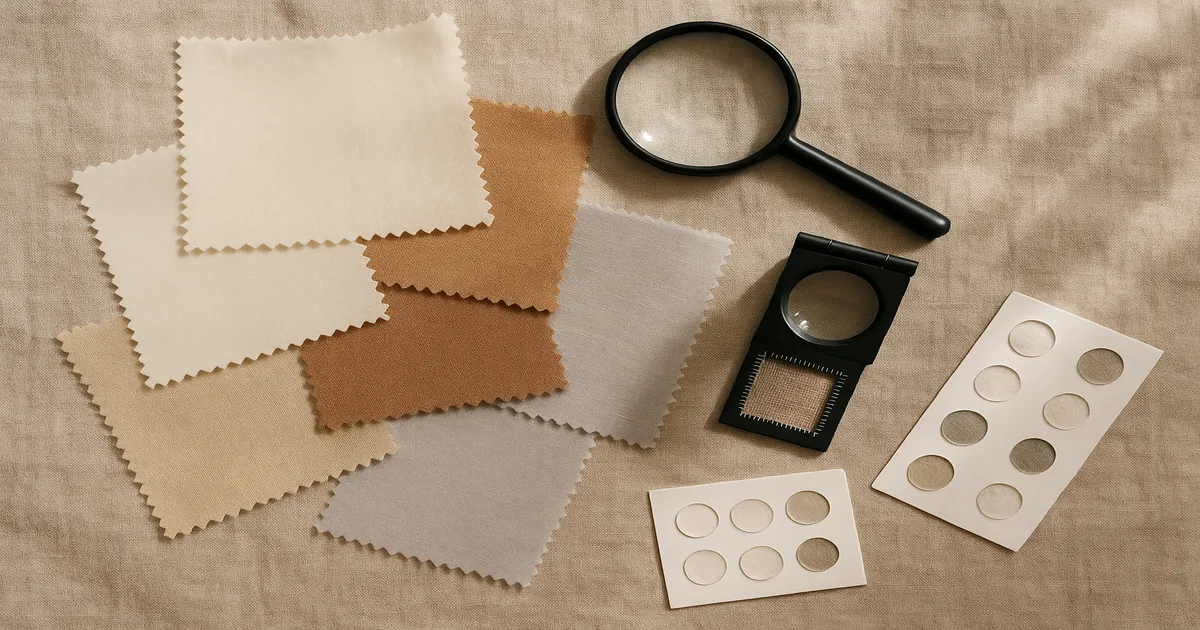
Most quality online retailers offer swatches for $1–$3 each, typically 4 × 4 to 6 × 6 inches (10–15cm). When yours arrives, run through these quick checks:
- Hand feel: Does it drape well, or is it stiff and scratchy?
- Color accuracy: Hold it next to your monitor. How far off is it?
- Print registration: Are the colors aligned, or is there a blurry halo around the motifs?
- The scrunch test: Scrunch a corner tightly for 10 seconds and release. Quality quilting cotton springs back; cheap fabric stays crumpled.
- The window test: Hold it up to bright light. You shouldn’t be able to see your hand clearly through it — excessive transparency means a low thread count that will fray and lose print clarity fast.
Also check the selvage for color registration dots — those small colored circles along the edge show every ink color used in the print. Crisp dots mean good registration. Blurry dots mean a blurry print.
For color accuracy beyond the swatch, search the fabric’s colorway name on Instagram or Pinterest. Other sewists post real-life photos that are far more accurate than retailer photography.
Common Mistakes When Buying Novelty Fabric Online
Trusting your screen. Monitor color profiles vary enormously, and fabric photography is notoriously inconsistent. That vibrant teal can arrive as muted sage. Swatch first, always, for any order over a yard.
Underestimating yardage for large prints. For any print with motifs larger than 3 inches (7.5cm), add 25–30% automatically. The leftover makes great binding or backing accents — it never goes to waste.
Ignoring fabric content. Poly-cotton blends behave differently under the iron, don’t take hand quilting as well, and can feel scratchy against skin. If the listing doesn’t explicitly say “100% quilting cotton,” email the retailer before you buy.
Skipping pre-washing. Novelty quilting cottons shrink 2–5% in the first wash. For deeply saturated prints — black backgrounds, rich reds, navy — use a dye fixative before washing to prevent bleeding. Test any new fabric by pressing a damp white cloth against it; if color transfers, treat it before it goes near your other fabrics.
Forgetting print direction when cutting. Before you cut a single piece, decide whether your print is directional. If it is, plan your entire cutting layout so every piece faces the same way. Sketch it out on paper if you need to. Discovering upside-down animals after you’ve sewn half your blocks together is a special kind of miserable.
Pro Tips for Finding the Best Novelty Fabric Online
Track down sold-out prints. Bookmark the “new arrivals” page of your three or four favorite shops and check it weekly. The best novelty prints sell out fast — sometimes within days — and many never come back. Sign up for restock newsletters; some indie shops send dedicated alerts when a sold-out print returns.
Shop by designer, not just theme. Once you find a designer whose aesthetic clicks with yours, follow their collections. Tula Pink, Ruby Star Society, Libs Elliott — these designers produce cohesive collections where everything works together, which makes coordinating prints far easier than hunting by motif.
Use wishlists before you buy. Use the wishlist or “save to collection” feature on retailer sites to group fabrics visually before committing. Seeing them together on screen — even as thumbnails — catches color clashes that aren’t obvious when you’re looking at individual listings.
Handle metallics and digital prints with care. Metallics and foils need gentle handling throughout: low-heat washing (or hand washing), no direct iron contact, and careful cutting to avoid scratching the surface with your ruler. Use a Teflon pressing sheet or press from the wrong side only. Digital prints are more forgiving but benefit from a cold-water pre-wash to soften the hand before cutting. Store novelty fabric rolled rather than folded when you can — fold lines in novelty prints can be surprisingly stubborn to press out.
One last thing: the “ugly fabric” rule is real. If a novelty print makes you laugh, cringe, or feel something strong — even if your rational brain says it’s hideous — buy it. The safe, pretty prints are the ones that sit in your stash for years. The weird ones always find their project.
Frequently Asked Questions About Buying Novelty Fabric Online
What is the best website to buy novelty fabric online?
For sheer variety, Spoonflower is hard to beat — millions of independent designer prints, including themes you’ll find nowhere else. For quality quilting cotton from established designers, Fat Quarter Shop and Hawthorne Supply Co. are excellent. If budget is the priority, JOANN online with a coupon is solid. The honest answer is that the best site depends entirely on what you’re looking for.
How much novelty fabric do I need for a lap quilt?
A standard lap quilt (approximately 54 × 72 inches/137 × 183cm) typically requires 2–3 yards (1.8–2.75m) of a feature novelty print, depending on the pattern. For large-scale or directional prints that require fussy cutting, budget closer to 3.5–4 yards (3.2–3.65m). Always add at least 25% overage for large-scale prints — running short on a discontinued novelty print is one of the more frustrating things that can happen mid-project.
Is it safe to buy fabric on Etsy?
Yes, with some caution. Read seller reviews carefully, specifically looking for comments about color accuracy and fabric quality. Many Etsy sellers offer small cuts or swatches, so take advantage of that before ordering several yards. Established sellers with hundreds of reviews and detailed product descriptions are generally reliable; brand-new shops with no reviews warrant more scrutiny.
How do I know if licensed character fabric is authentic?
Buy from authorized retailers: JOANN, Fat Quarter Shop, and most independent quilt shops carry legitimate licensed fabric from manufacturers like Sykel Enterprises and Springs Creative. If you see licensed character fabric on a marketplace like eBay or Amazon at $3–$5/yard, assume it’s counterfeit. Authentic licensed fabric typically retails at $10–$20/yard.
What’s the difference between a fat quarter and regular yardage?
A fat quarter is an 18 × 22 inch (46 × 56cm) cut — essentially a half-yard cut in half the other way, giving you a more usable square shape than a standard quarter-yard (9 × 44 inches). Fat quarters are ideal for sampling novelty prints or cutting feature blocks. For anything larger than a wall hanging, though, you’ll want full yardage — trying to piece a quilt top from fat quarters alone gets frustrating fast.