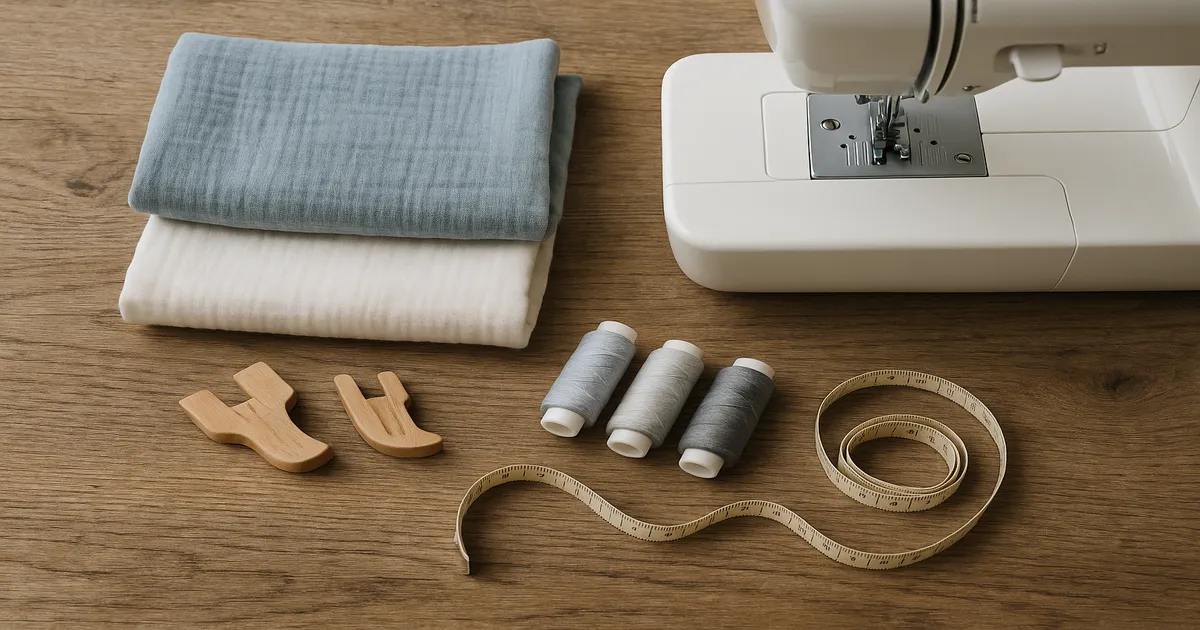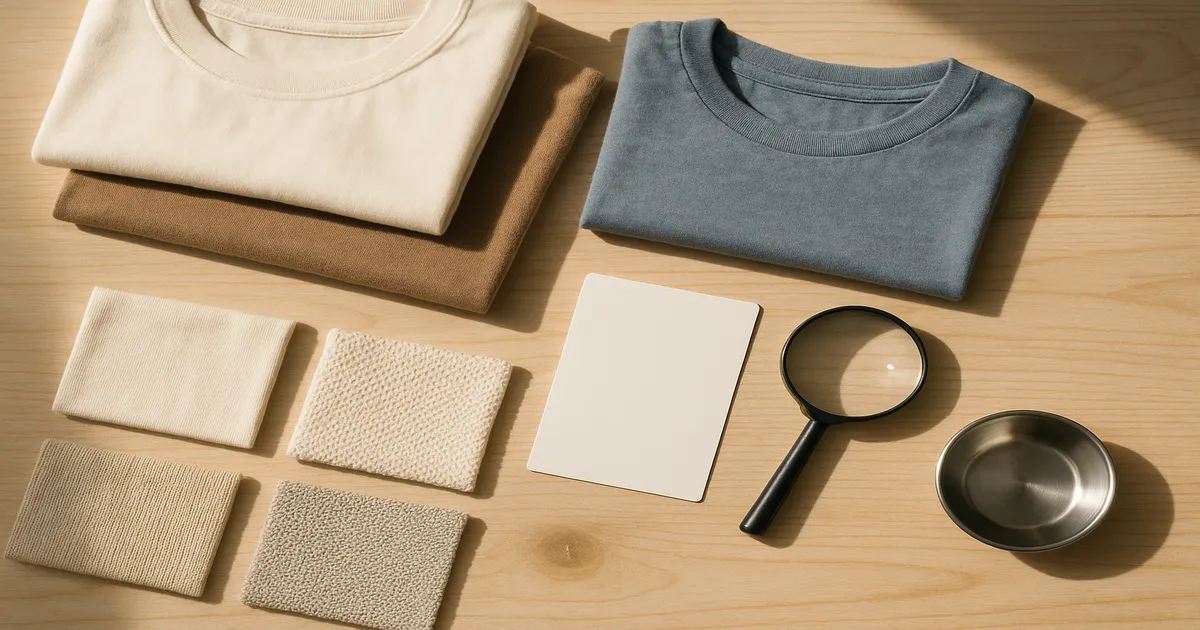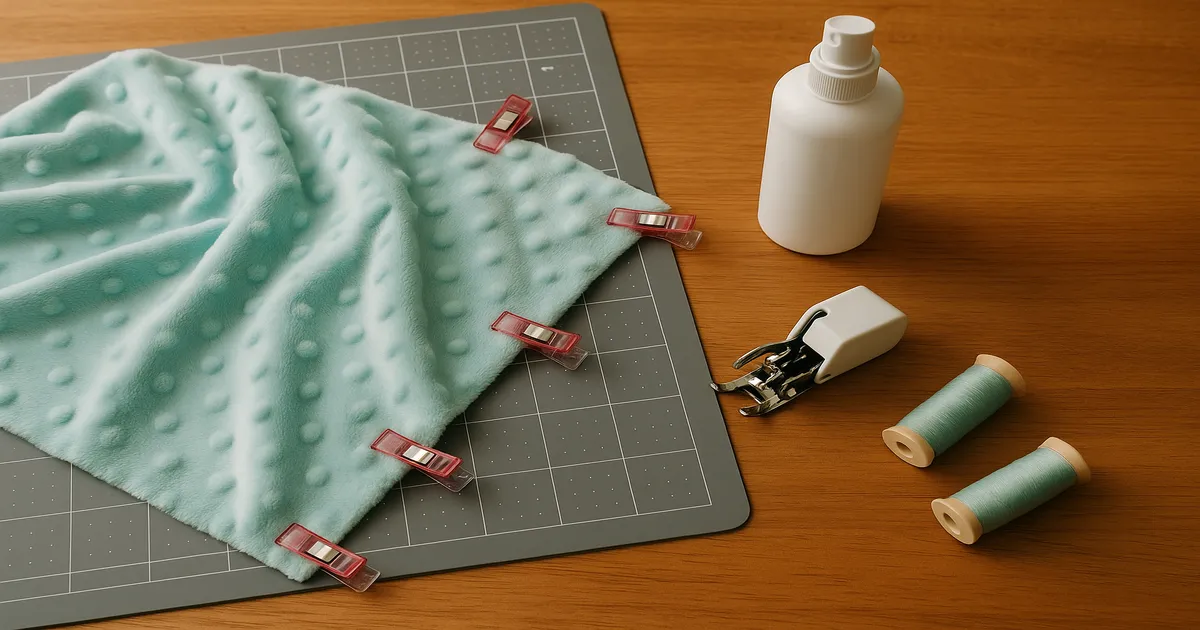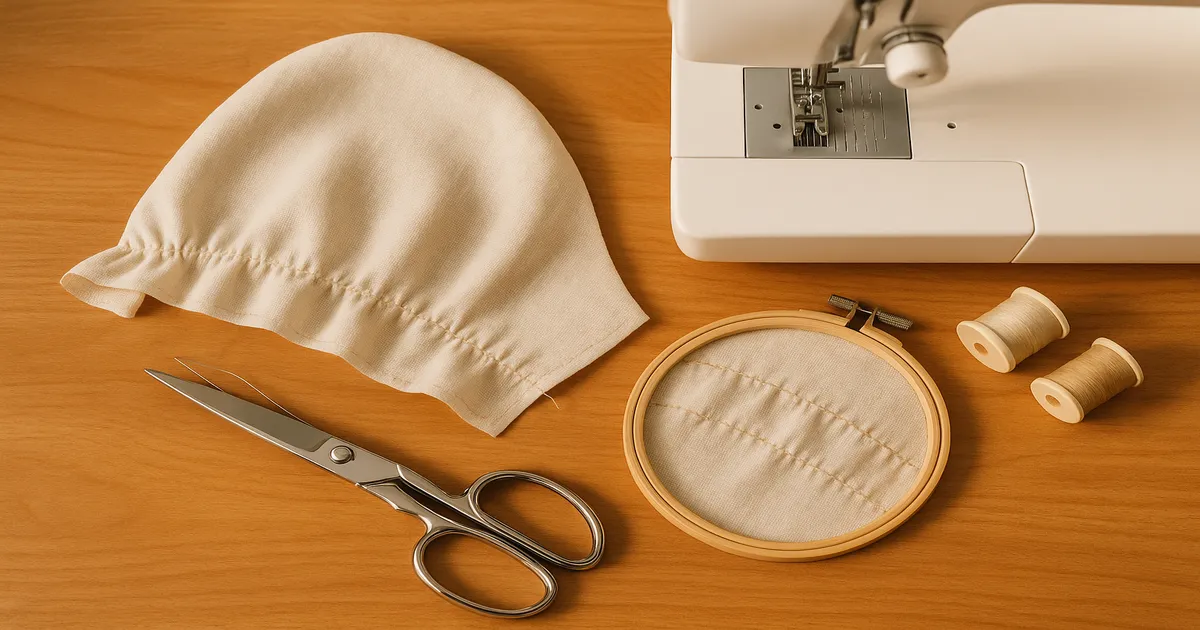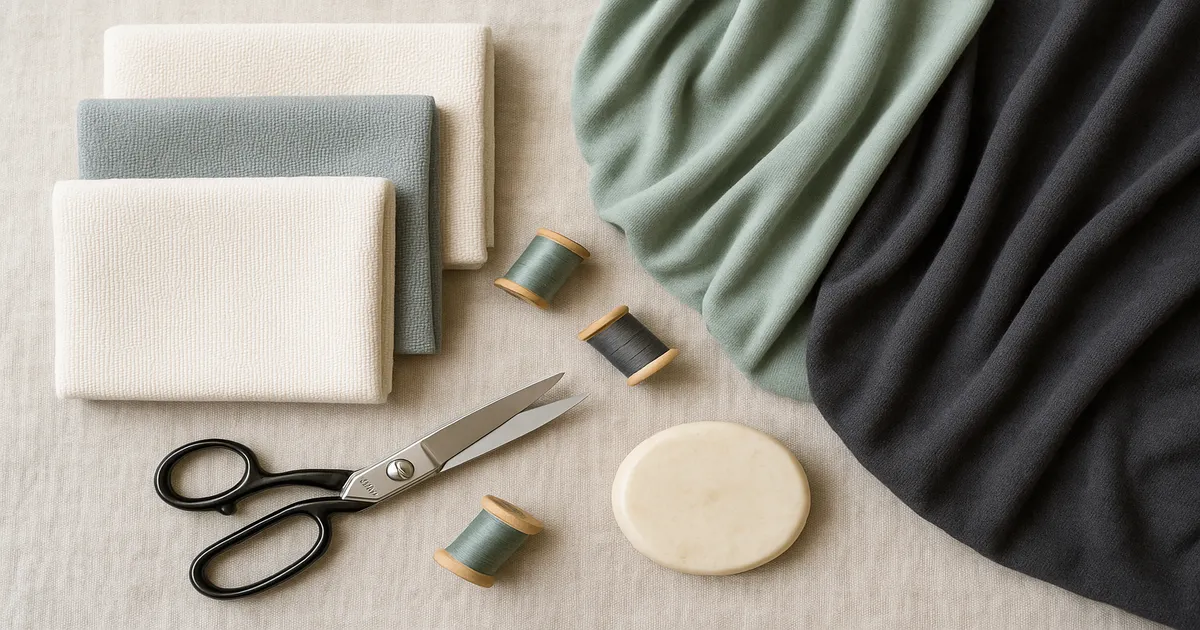
Quick Answer: Yes, you can combine woven and stretch fabric in a single project — and it’s more manageable than you’d think. The key is understanding that these two fabric types move differently, then making deliberate choices at every stage: the right needle, the right stitch, and a walking foot on your machine.
Mixing woven and stretch fabric is one of those techniques that feels intimidating until you’ve done it once, and then you wonder why you ever avoided it. The question comes up constantly in sewing communities, and the answer is a confident yes — designers and manufacturers have been doing it for decades. A denim jacket with a stretch back panel, a linen dress with ribbed cuffs, woven trousers with a jersey gusset: these aren’t advanced tricks. They’re practical solutions hiding in plain sight.
Can You Really Combine Woven and Stretch Fabric?
Combining means using both fabric types within one project — as separate panels sewn together at a seam. A woven bodice joined to a jersey skirt. A stretch side panel set into woven trousers. Ribbing stitched to the cuffs of a chambray shirt. You’re not blending the fabrics; you’re sewing distinct pieces of each together.
The reasons sewists do this are almost always practical. Stretch panels in high-movement areas — underarms, crotch gussets, waistbands — add ease without requiring extra ease built into the pattern. A stretch side seam can eliminate the need for a zip entirely. And visually, the contrast between a crisp woven and a fluid knit can be genuinely beautiful when it’s intentional.
This isn’t some experimental technique, either. Claire McCardell was combining structured wovens with jersey knits in the 1940s. DuPont’s introduction of Lycra in 1958 expanded the possibilities further, and today activewear, maternity wear, and adaptive clothing use this approach constantly. Commercial home-sewing patterns have been slow to catch up — but that’s their problem, not yours.
How Woven and Stretch Fabrics Behave Differently
Woven fabrics are made on a loom: warp threads run lengthwise, weft threads run crosswise, interlacing at right angles. That structure is inherently stable. The only place a woven gives is on the true bias — the 45-degree diagonal — where you might get 10–15% stretch. Everywhere else, it holds its shape.
Knit fabrics are constructed from interlocking loops of yarn, which is why they stretch. Two-way stretch fabrics (like most jersey) stretch primarily in one direction — usually crosswise — by around 25–50%. Four-way stretch fabrics (like swimwear lycra or spandex blends) stretch in all directions, often 50–75% or more. Knowing which you’re working with matters, because it affects how you orient the fabric on your pattern pieces.
Three things can go wrong when you sew these two together. A standard straight stitch has zero elongation — it’ll pop the moment a stretch seam is pulled. The two layers may feed through your machine at different rates, causing puckering. And you need to decide whether each seam should be stable or flexible, then stabilize accordingly. None of these are unsolvable; they just require deliberate choices.
Best Fabric Combinations to Start With
Wovens That Play Well With Stretch
Some wovens are simply easier to work with in mixed projects:
- Cotton poplin (3–4 oz/sq yd / 100–135 gsm) — stable, doesn’t fray aggressively, easy to press
- Chambray (3–4 oz/sq yd / 100–135 gsm) — lightweight, drapes beautifully alongside jersey
- Linen (4–7 oz/sq yd / 135–240 gsm) — pairs wonderfully with cotton jersey for summer garments; press carefully
- Denim (8–12 oz/sq yd / 270–410 gsm) — works well with ponte or stretch denim for structured hybrid pieces
- Canvas/twill (7–10 oz/sq yd / 240–340 gsm) — great for bags or outerwear with functional stretch panels
Stretch Fabrics Best Suited for Mixed Projects
Ponte de Roma is my top recommendation for beginners, full stop. It behaves almost like a woven — minimal curl, good body, doesn’t distort when you look at it sideways. After that:
- Cotton/spandex jersey (95/5 blend, 6–8 oz/sq yd / 200–270 gsm) — stable, widely available, forgiving
- Ribbing — purpose-built for cuffs, waistbands, and neckbands on woven garments
- Power mesh (nylon/spandex, 2–3 oz/sq yd / 70–100 gsm) — for functional panels in activewear or corsetry
- Stretch velvet — for decorative panels; requires a nap layout and a walking foot
Match Your Weights — Seriously
This is the part people skip, and it shows. Pair a heavy canvas with a lightweight jersey and the woven panel will drag the knit down; the whole garment looks off. Match weights as closely as you can — a medium-weight linen with a medium-weight ponte, for example. When in doubt, hold both fabrics up together and let them hang. If one overwhelms the other, reconsider the pairing before you cut anything.
Tools You Need Before You Start
The Right Needle
Use a stretch needle (marked with a blue band) in size 75/11 for lighter fabrics or 90/14 for medium-weight combinations. Stretch needles have a slightly rounded point and a deeper scarf — the groove above the eye — that prevents the skipped stitches that plague knit sewing. Replace your needle every 6–8 hours of sewing time. A dull needle causes more knit-sewing frustration than almost anything else.
| Application | Needle Type | Size |
|---|---|---|
| Knit to woven (general) | Stretch (blue band) | 75/11 or 90/14 |
| Lightweight fabrics | Universal or stretch | 70/10 or 75/11 |
| Denim or canvas panels | Jeans needle | 90/14 or 100/16 |
| Topstitching | Topstitch needle | 90/14 or 100/16 |
A Walking Foot — Not Optional
A walking foot (even-feed foot) has an upper feed mechanism that grips both fabric layers simultaneously, so the stretch fabric can’t creep forward faster than the woven. For mixed-fabric seams, it’s not a nice-to-have. A roller foot works well for very slippery stretch fabrics like swimwear lycra, and a Teflon foot helps with synthetics that stick to a standard metal foot.
Thread
Use 50-weight all-purpose polyester thread — Gutermann Sew-All or Coats & Clark both work well. Polyester has about 15–20% inherent elongation, meaning it gives slightly when a seam is stressed rather than snapping. Cotton thread has no elongation and will break on any seam that sees movement. For serger loopers, wooly nylon maximizes stretch recovery; just don’t use it in the needle.
Stabilizers and Notions
- Clear elastic (¼ inch / 6mm): Stabilizes stretch seam lines at shoulders and necklines without bulk
- Twill tape (¼ inch / 6mm): For stabilizing seam lines on woven pieces
- Weft-insertion fusible interfacing — Pellon SF101 Shape-Flex or Vilene G700 adds stability to woven pieces without making them board-stiff; don’t use woven interfacing on pieces that need any flex
- Rotary cutter and self-healing mat: A 45mm or 60mm blade cuts both fabric types cleanly without distortion
- Pattern weights: Essential for cutting stretch fabric without pins pulling it out of shape
- Tailor’s ham: For pressing curved seams where woven meets stretch
How to Sew Woven and Stretch Fabric Together
Step 1 — Plan Your Pattern
Write “W” or “K” (for knit) directly on each pattern piece before you cut anything. Check your stretch fabric’s actual stretch percentage using the 4-inch fold test: fold the fabric, measure 4 inches (10cm) along the fold, stretch it as far as it comfortably goes, and measure again. A fabric that stretches from 4 inches to 6 inches has 50% stretch. Orient the stretch direction so it runs toward the movement — crosswise for side panels, lengthwise around the body for waistbands. Interface any woven pieces that will be under stress: necklines, button plackets, waistband edges.
Step 2 — Cut Accurately
Cut woven pieces first, on grain, using a rotary cutter on a mat. Cut stretch fabric in a single layer — folding it introduces distortion, especially with high-stretch fabrics. Use pattern weights instead of pins, and mark notches as small outward triangles rather than inward cuts, which can weaken a stretch seam.
Step 3 — Stabilize Before You Sew
This step separates a professional result from a wobbly one. On the woven piece, stay-stitch at ½ inch (12mm) from the cut edge using a straight stitch at 2.0–2.5mm — do this immediately after cutting, before anything else. On curved woven edges, clip the seam allowance at ⅜-inch (9mm) intervals up to — but not through — the stay-stitching, so the fabric will lie flat against the stretch piece.
For the stretch piece: if the seam should be stable (a shoulder seam, a neckline), baste a strip of ¼-inch (6mm) clear elastic to the seam line before joining. If the seam needs to flex (a side panel, a gusset), leave the stretch piece as-is.
Step 4 — Sew the Seam
Place the woven fabric on top when feeding through the machine — the feed dogs grip the bottom layer harder, so putting the woven on top gives you more control. Pin perpendicular to the seam line every 1–1.5 inches (2.5–4cm), removing pins as you go.
Stitch options, in order of preference:
- Serger 4-thread overlock with differential feed set to 0.7–0.9 — the gold standard
- Narrow zigzag at width 1.0–1.5mm, length 2.0–2.5mm — reliable all-purpose choice on any machine
- Lightning bolt / triple zigzag at width 2.5–3.0mm, length 0.5–1.0mm — very secure, good for moderate-stretch seams
- Stretch stitch (if your machine has one) — strong, but hard to unpick if you make a mistake
- Straight stitch — only for seams you’ve deliberately stabilized with tape or elastic
Sew at a consistent, moderate speed. Don’t pull from behind or push from the front. Let the walking foot and feed dogs do the work.
Step 5 — Press and Finish
Press the seam allowance toward the woven side — woven fabric handles heat better and the allowance lies flatter against it. Always use a press cloth over synthetic stretch fabrics, and keep your iron at no more than 275°F (135°C) for polyester-based knits; cotton knits can handle 300–350°F (150–175°C).
Finish the woven seam allowance with a serger, a zigzag stitch (width 3.0mm, length 2.5mm), or a Hong Kong finish to prevent fraying. Stretch seam allowances generally don’t fray, but serging both together gives a clean result. Topstitch with your walking foot at ¼ inch (6mm) or ⅜ inch (9mm) from the seam line.
Common Mistakes
Using a straight stitch on a seam that will stretch. A straight stitch has no elongation. The first time that seam gets pulled — putting on the garment, sitting down, reaching overhead — it pops. Switch to a zigzag or stretch stitch for any seam under tension.
Skipping the stay-stitch on curved woven edges. Woven fabric will distort along a curved seam line before you’ve even threaded your needle, especially on necklines and armscyes. Stay-stitching immediately after cutting takes 90 seconds and prevents a lot of heartbreak.
Stretching the knit while sewing. If you’re guiding the fabric by pulling it slightly taut, you’ll end up with a wavy, shortened seam. The finished panel will be shorter than the pattern piece. Put the walking foot on and genuinely let the machine feed the fabric.
Using the wrong needle. A universal needle’s sharp point can deflect off the loops of a knit instead of passing through cleanly, causing skipped stitches. If you’re getting skipped stitches, swap to a stretch needle before you do anything else — nine times out of ten, that’s the fix.
Mismatching fabric weights. A heavy woven panel sewn to a lightweight knit will drag it out of shape. Match your weights thoughtfully. When you’re at the fabric store, drape potential combinations over your arm together — if one overwhelms the other, they won’t work as panels in the same garment.
Where to Use This Technique
The most practical applications solve real fit problems. A diamond-shaped jersey gusset in the crotch of woven trousers transforms how they feel to wear. A stretch knit waistband replacing a woven facing eliminates bulk and doesn’t require a zip. A stretch side panel in a fitted woven dress gives you the ease you need without changing the silhouette.
Visually, the contrast between a crisp woven and a fluid knit is striking when it’s intentional. A chambray blouse with ribbed cuffs looks polished and modern. A denim jacket with a stretch jersey back panel reads as deliberately designed. A woven bodice paired with a jersey skirt gives you structure on top and ease on the bottom — a combination that’s genuinely flattering on a lot of bodies.
Activewear, maternity wear, and adaptive clothing are where mixed-fabric construction is most obviously necessary. Ready-to-wear has been doing all of this for years. There’s no reason your handmade garments can’t too.
Frequently Asked Questions
What stitch should I use when sewing woven fabric to stretch fabric?
A narrow zigzag (width 1.0–1.5mm, length 2.0–2.5mm) is your most reliable option on a standard sewing machine. If your machine has a dedicated stretch stitch or lightning bolt stitch, those work well too. A serger with a 4-thread overlock and differential feed gives the most professional result. Avoid a straight stitch on any seam that will be under stretch tension — it will pop.
Do I need a special needle to combine woven and stretch fabric?
Yes. Use a stretch needle (blue band) in size 75/11 or 90/14. The slightly rounded tip finds the gap between the knit loops instead of deflecting off them, which is what causes skipped stitches. A universal needle can work in a pinch on stable knits like ponte, but for anything with significant stretch, the stretch needle is the right tool.
How do I stop stretch fabric from puckering when sewn to a woven?
Puckering almost always comes from the two layers feeding at different rates. A walking foot solves this by gripping both layers simultaneously. Also make sure you’re not pulling or pushing the fabric — let the feed dogs work. If puckering persists on a serger, adjust your differential feed; on a regular machine, try slightly loosening the upper thread tension.
Can I use a regular sewing machine, or do I need a serger?
A regular machine with zigzag capability is completely sufficient. A serger makes finishing seam allowances faster and gives a cleaner result, but it’s not required. The non-negotiable is a walking foot attachment — most machines accept a generic even-feed foot, and it makes a bigger difference than any other single upgrade for this type of sewing.
Does combining woven and stretch fabric work for beginners?
Absolutely, as long as you start with forgiving combinations. Ponte de Roma paired with a medium-weight cotton poplin is about as beginner-friendly as it gets — ponte behaves almost like a woven, so the contrast in behavior between the two panels is minimal. Get that seam right a couple of times before you move on to high-stretch jersey or slippery lycra.