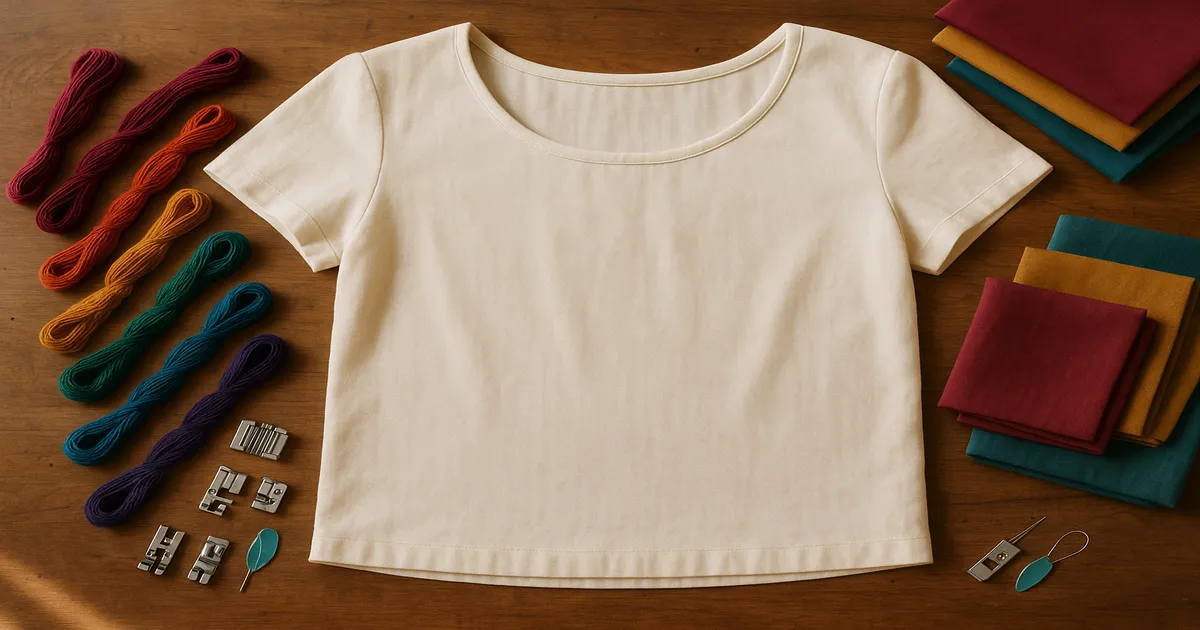
Quick Answer: Want to make a plain top look more interesting? Six techniques will do it: pintucks, a contrast yoke or color-blocked panel, gathered ruffles, hand embroidery, smocking, and decorative topstitching. They work by adding contrast, texture, movement, a focal point, or a change in proportion — the five things that turn a forgettable garment into one you actually want to wear. They range from dead-simple (topstitching) to satisfyingly involved (smocking), so there’s something here no matter where you are with your skills.
If you’ve ever finished sewing a top, held it up, and thought it’s fine, but… — you’re not imagining things. How do I make this top look more interesting? is one of the most common creative roadblocks in garment sewing, and the answer isn’t to find a fancier pattern. It’s to understand which design moves create visual impact and apply them to what you’ve already got.
Why Plain Tops Feel Flat
Mass-produced tops are deliberately boring — that’s not an accident, it’s an engineering decision. Minimal seaming, no design details, and neutral silhouettes are cheaper to produce at scale. The fashion industry calls these “commodity basics,” and they’re intentionally designed to be invisible on the rack.
Home sewists often start with basic patterns for good reason (they’re easier to fit and construct), then end up with the same invisible result.
A garment becomes interesting when it has at least one of these: contrast (color, value, or texture), surface texture, movement (ruffles, drape, released tucks), a focal point, or a change in proportion. Most plain tops have none of these. Add even one and the whole thing wakes up.
Technique 1: Pintucks for Texture and Structure
A pintuck is a narrow stitched fold of fabric — usually 1/8 inch (3mm) wide — that creates texture and subtle structure. They look best in groups and work well on the front bodice, yoke area, or sleeve cap. Quilting cotton and linen are ideal; both hold a pressed crease beautifully.
Before you cut anything: each 1/8-inch pintuck consumes 1/4 inch (6mm) of fabric width. Five pintucks eat 1-1/4 inches (3.2cm). Cut your fabric panel wider than the pattern piece by the total amount consumed, do the pintucks, then re-trim to size. Skip this step and your bodice will be too narrow to fit. I’ve seen it happen more times than I can count.
How to sew them:
- Mark parallel lines 1/4 inch (6mm) apart using a water-soluble pen.
- Fold the fabric along the first line, wrong sides together, exactly on the marked line.
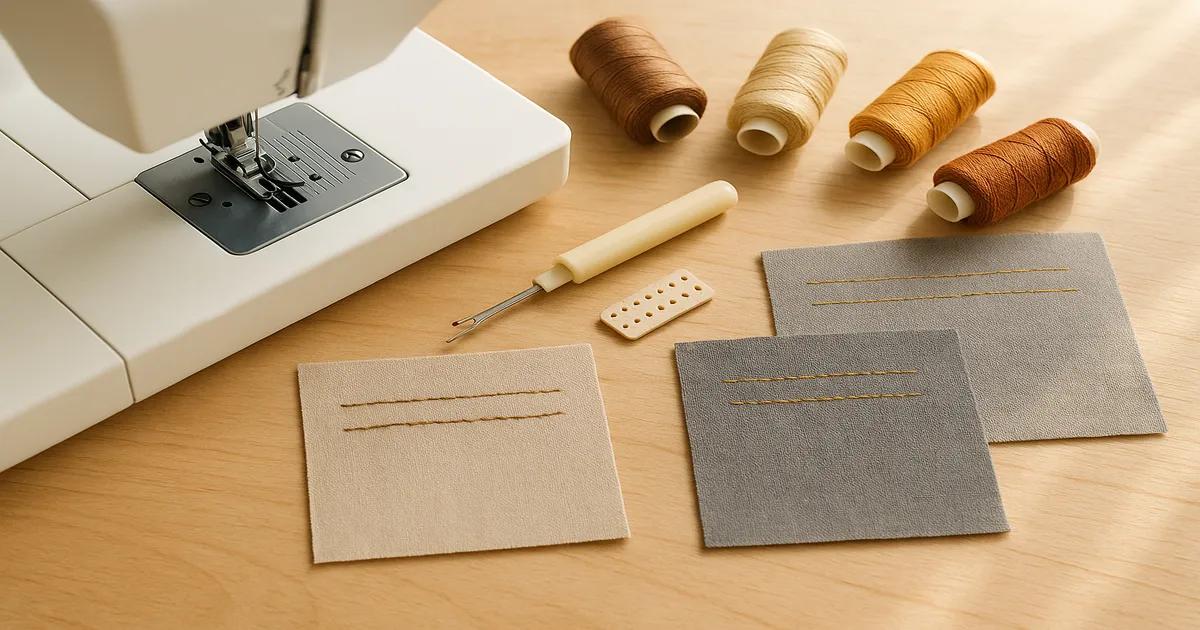
- Stitch 1/8 inch (3mm) from the fold at a 2.0–2.5mm stitch length.
- Press the pintuck to one side. Press all of them the same direction, or mirror them toward center — pick one and commit.
- Repeat, spacing pintucks 1/4 to 1/2 inch (6–12mm) apart depending on how dense you want the texture.
For a released pintuck, stitch only the top 2–3 inches (5–7.5cm) of the fold and leave the rest unstitched. The fabric fans open below, adding volume at the bust or hem — a lovely detail on a boxy blouse where you want shape without a fitted seam.
Technique 2: Contrast Yoke or Color-Blocked Panel
Color blocking is one of the highest-impact changes you can make with fairly simple construction. Draw your new seamline directly on the pattern piece — typically 4–6 inches (10–15cm) below the shoulder on the front, 3–5 inches (7.5–12.5cm) on the back. Cut the pattern apart along that line and add 5/8 inch (15mm) seam allowance to both cut edges for wovens, 1/4 inch (6mm) for knits.
To sew it:
- Cut the yoke piece from your contrast fabric.
- Stitch yoke to body, right sides together, along the new seamline.
- Press the seam allowance upward, toward the yoke.
- Topstitch 1/4 inch (6mm) from the seamline — this reinforces the seam and turns it into an intentional design line.
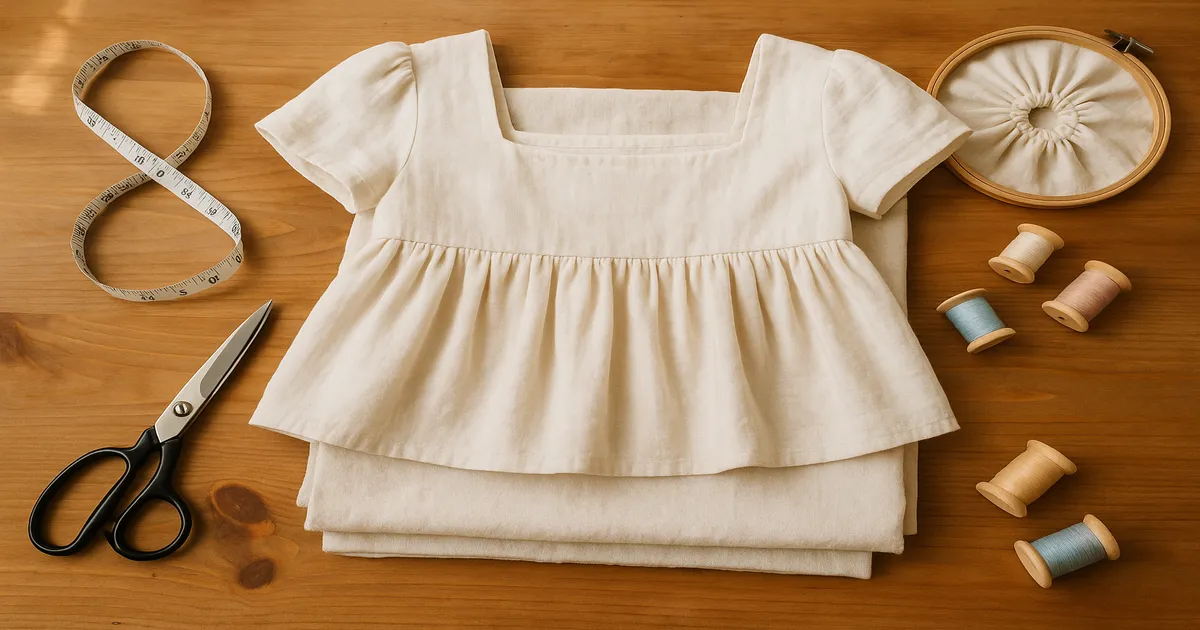
A curved yoke seam — either concave (scooping down toward center) or convex (arching up) — adds significant visual interest and is only marginally harder to sew. Clip the concave edge before pressing so it lies flat. Even a gentle curve reads as far more deliberate and polished than a straight line.