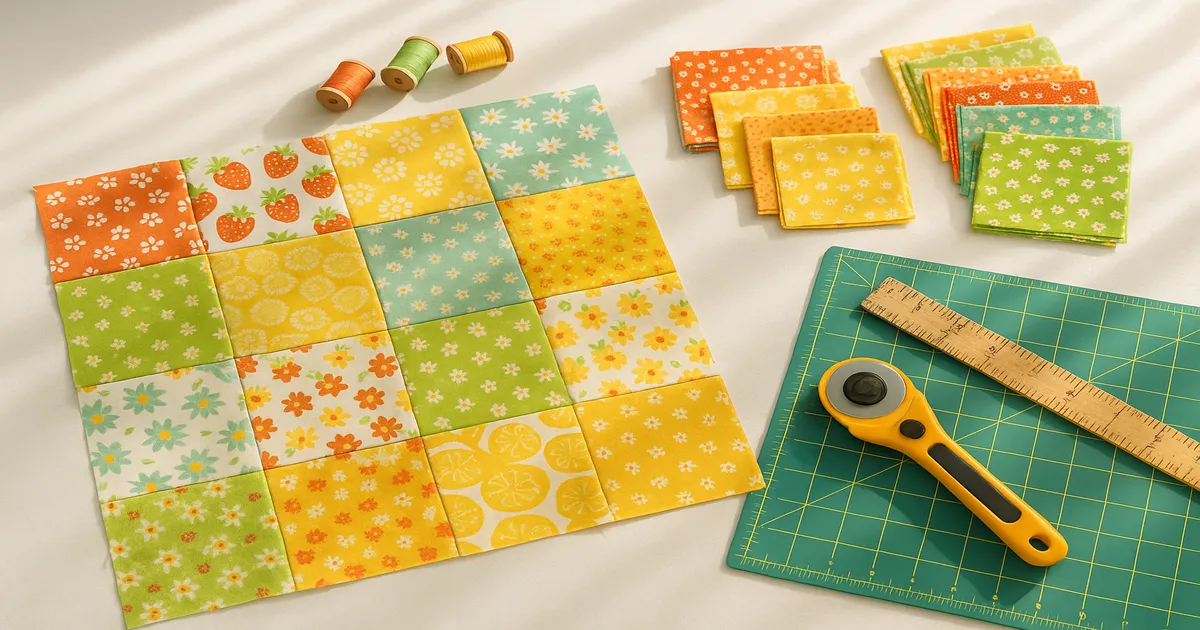
Quick Answer: Yes — most quilters can finish a summer quilt before the season ends, but only if they pick the right size for their remaining timeline. A lap quilt takes beginners 40–80 hours total. Count your available weeks, match them to a quilt size, and work backward from your deadline. That’s the whole game.
So you’ve been eyeing that summer quilt pattern since May, and now it’s July and you’re wondering whether you’ve already missed your window. You haven’t. Whether your summer ends at Labor Day, the first day of school, or the autumnal equinox on September 21, the question of whether your summer quilt will be finished before summer is over comes down to three things: how many weeks you have left, which size fits that window, and whether you’re honest with yourself about both.
The rest is just sewing.
Will Your Summer Quilt Actually Be Finished in Time?
The Honest Reality Check
A beginner needs roughly 40–80 hours to complete a lap quilt from cut fabric to bound edges. An experienced quilter can do the same in 15–25 hours. That’s a huge range, which is why “can I finish in time?” doesn’t have a universal answer — it has your answer, based on your skill level and how many hours a week you can actually sit down at the machine.
Here’s the thing: summer is longer than it feels when you’re in panic mode. Eight or more weeks left? A lap quilt is absolutely within reach. Four or five weeks? A baby quilt is your friend.
How Many Weeks Do You Actually Have Left?
Pick your personal end date — not “the end of summer” in the abstract, but the specific date that matters to you. Count the weeks. Then subtract two as a buffer for real life, because real life always shows up. What’s left is your actual working timeline, and everything else flows from that number.
Choosing the Right Quilt Size for Your Remaining Timeline
Size-to-Timeline Chart: Baby, Lap, Twin, and Queen
Here’s the honest breakdown for beginner quilters. Experienced quilters can compress these timelines by roughly 40%.
| Quilt Size | Finished Dimensions | Beginner Timeline |
|---|---|---|
| Baby | 36 × 52 in (91 × 132 cm) | 4–6 weeks |
| Lap | 50 × 65 in (127 × 165 cm) | 6–10 weeks |
| Twin | 60 × 80 in (152 × 203 cm) | 10–14 weeks |
| Queen | 90 × 108 in (229 × 274 cm) | 16–24+ weeks |
Why Queen-Size Quilts Are a Summer Trap
Every summer, quilters decide in early July that they’ll make a queen-size quilt by Labor Day. Almost none of them make it. A queen requires 16–24+ weeks at a beginner pace — you’d have needed to start in March. If that’s what you started, consider making a matching lap quilt instead and saving the queen for a winter project with a longer runway. It’s not giving up. It’s finishing something.
Your Week-by-Week Summer Quilt Timeline
This is built for a 10-week lap quilt. Compress or expand it based on your actual dates.
Week 1: Pattern Selection, Fabric Shopping, and Pre-Washing
Choose your pattern first, buy fabric second. Pre-wash everything at 30°C (86°F) on a gentle cycle — quilting cotton shrinks 2–3%, and you want that to happen now, not after the quilt is finished. Press everything before you cut. This week is all prep, and prep done right saves you hours later.
Weeks 2–4: Cutting and Piecing the Quilt Top
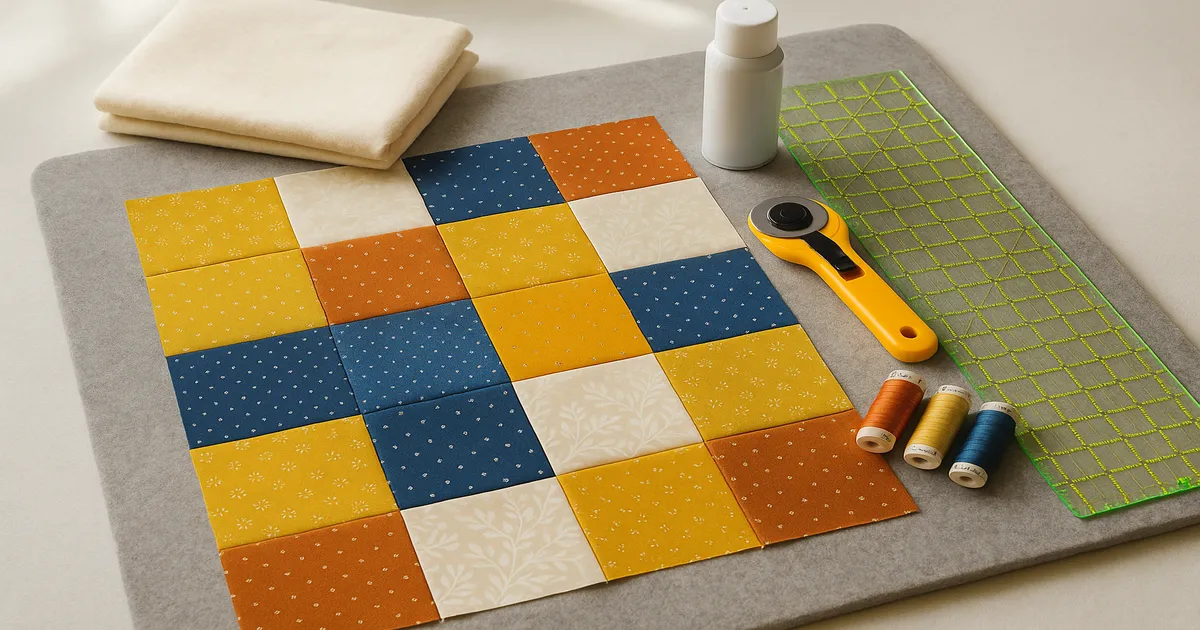
Start with a fresh rotary blade — a dull one is genuinely the number one cause of inaccurate cuts, and inaccurate cuts compound fast. The Olfa 45mm Rotary Cutter is the standard for a reason: it’s reliable, replacement blades are cheap, and it’ll outlast a dozen cheaper alternatives. Set your machine to a 2.0–2.5mm stitch length and use a ¼-inch (6mm) quilting foot for every seam.
Chain piece as much as possible — feed pairs through the machine continuously without cutting threads between them. A chain of 20 pairs takes roughly the same time as sewing 12 individually. Across hundreds of seams, that adds up to hours saved.
Do a seam test before you cut all your fabric: sew three 2.5-inch (6.4cm) squares together, press, and measure. The result must be exactly 6.5 inches (16.5cm). Even a 1/16-inch (1.5mm) deviation multiplied across 100 seams can throw a block off by ½ inch (12mm). Fix it now, not after you’ve pieced 20 blocks.
Weeks 5–6: Pressing, Squaring Up, and Building the Quilt Sandwich
Press seams to the dark side to prevent show-through, or press open for maximum flatness — either works, just be consistent. A wool pressing mat like the Woolly Felted Pressing Mat speeds this up considerably; the wool holds heat and lets you press both sides of a seam without flipping the iron back and forth.
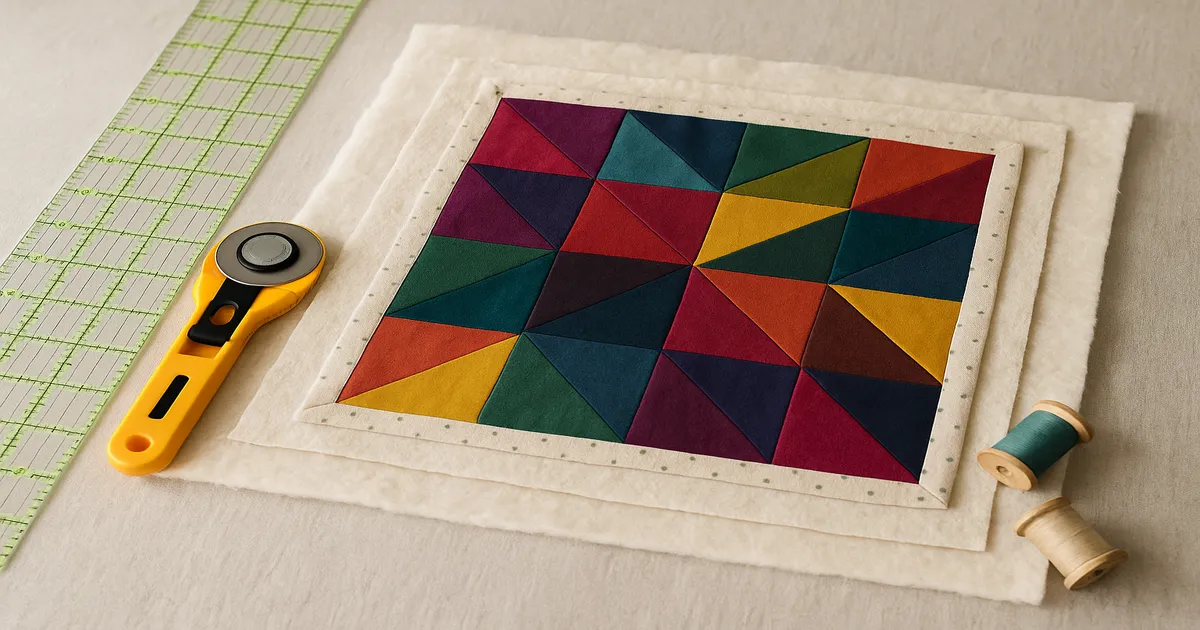
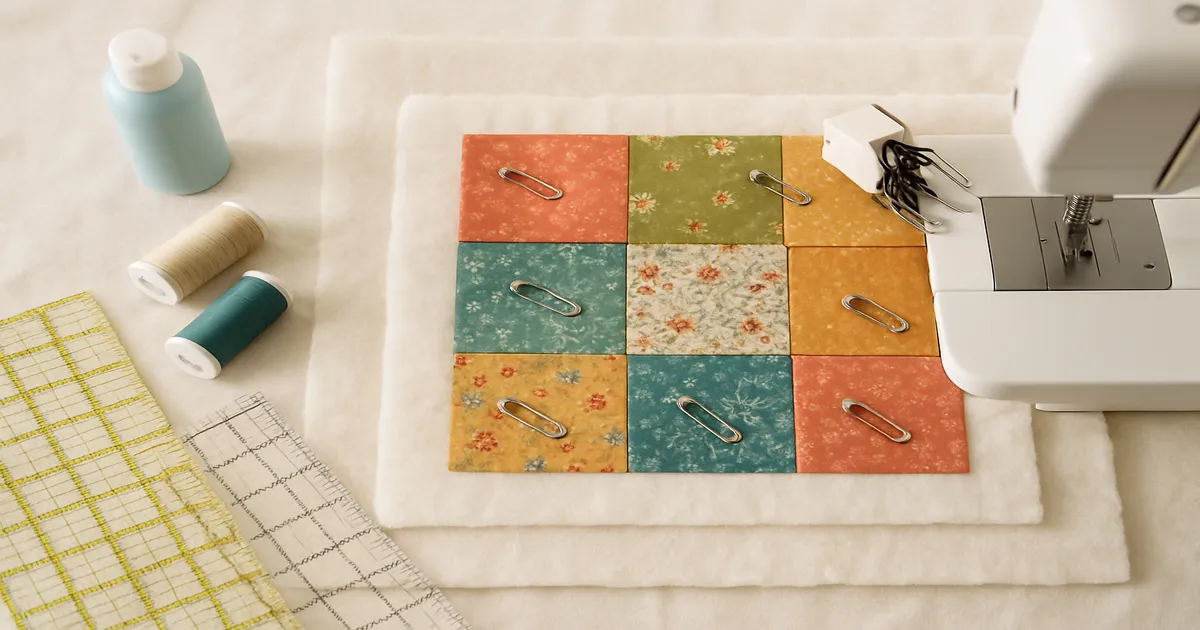
Cut your batting and backing 4–6 inches (10–15 cm) larger than your quilt top on all sides. This gives you working room when basting and means you won’t end up short at the edges when quilting shifts things slightly.
For basting, spray adhesive is dramatically faster than pins — 505 Spray and Fix cuts the basting phase from about an hour to 15 minutes. Ventilate the room well, or take the whole thing outside.
Weeks 7–9: Quilting Your Layers Together
For beginners, straight-line quilting with a walking foot is the move. Use the edge of your foot as a guide and aim for lines spaced 1 inch (2.5 cm) apart. It’s fast, it looks clean, and it doesn’t require marking. Check your batting packaging for the maximum quilting distance — most cotton battings specify no more than 2–4 inches (5–10 cm) between lines.
If you want to try free-motion quilting (FMQ), practice on a 12 × 12 inch (30.5 × 30.5 cm) sandwich first. Don’t practice on your actual quilt.
If quilting is your bottleneck, consider sending your top to a professional longarm quilter. What would take you 2–3 weeks of wrestling with your home machine can come back in a few days for $50–$150 on a lap quilt. That’s a completely legitimate option when the goal is a finished quilt by summer’s end.
Week 10: Binding and the Finish Line
Cut binding strips 2.5 inches (6.4cm) wide on the straight of grain. Join them at 45-degree angles, press seams open, fold in half lengthwise, and attach to the quilt front with a ¼-inch (6mm) seam. Stop ¼ inch (6mm) from each corner, fold at 45 degrees to miter, then continue.
Hand-stitch the binding to the back with a blind stitch and matching 60-weight thread. This is the slow part. It’s also the most satisfying — you’re almost done.
Best Fabrics and Batting for a Summer Quilt
Fabric: Cotton, Linen, and Voile
A summer quilt is lighter in every sense — lighter batting, breathable fabrics, finished weight around 1–2 lbs (0.45–0.9 kg) versus a winter quilt’s 3–5 lbs (1.4–2.3 kg). The fabrics that actually work in warm weather are 100% quilting cotton, linen-cotton blends, and cotton voile.
100% quilting cotton is the workhorse — 44 inches (112cm) wide, 60–80 threads per inch, and easy to find. Robert Kaufman Kona Cotton washes well, presses beautifully, and comes in over 300 colors. Linen-cotton blends add texture but shrink more aggressively — pre-wash twice. Cotton voile is gorgeous and lightweight but slippery to cut; use pattern weights instead of pins at the cutting table.
Batting Ranked for Summer Use
- No batting — whole-cloth or two-layer construction, lightest possible option
- 100% cotton (Warm & Natural) — breathable, drapes beautifully, classic choice
- Bamboo (Pellon Nature’s Touch) — moisture-wicking, great for warm sleepers, runs $12–18/yard
- 80/20 cotton-poly low-loft — widely available, easy to quilt through
- Silk-poly blend (Quilter’s Dream Orient) — luxurious drape, premium price
How Much Fabric Do You Need for a Lap Quilt?
- Quilt top: 3–4 yards (2.75–3.65m) total across all fabrics
- Backing: 3.5 yards (3.2m) of 44-inch (112cm) fabric, or 1.75 yards (1.6m) of 108-inch (274cm) wide backing
- Binding: ½ yard (0.46m)
Buy 10–15% more than you think you need, especially for seasonal prints that sell out by August. Leftover fabric becomes a future project. Running out mid-quilt has no good solution.
Common Mistakes That Will Blow Your Summer Deadline
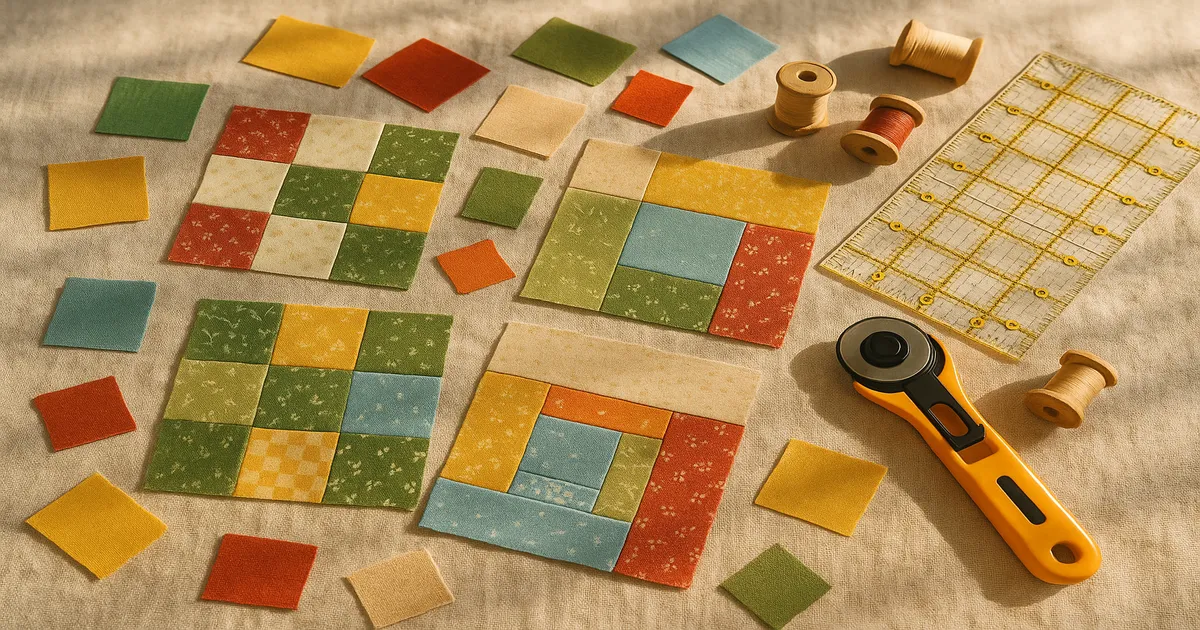
Picking a pattern that’s too ambitious. Curved piecing — Double Wedding Ring, Grandmother’s Flower Garden — is beautiful and genuinely hard. If you’ve never made the pattern before, add 50% to any time estimate you find online. For a summer sprint, stick to Half-Square Triangles, Rail Fence, Nine-Patch, or strip quilts. Finishing a simple quilt beautifully beats abandoning a complicated one.
Skipping pressing. Unpressed seams create lumpy blocks that don’t match at intersections and are harder to quilt through. This is the step most people rush, and it costs them twice the time later. Press after every seam. It feels slow. It isn’t.
Inconsistent seam allowances. Do the seam test in Week 2 (above) and don’t skip it. A tiny deviation multiplied across a whole quilt top is a big problem.
Frequently Asked Questions
How long does it take to make a summer quilt from start to finish?
It depends on size and experience. A beginner making a lap quilt (50 × 65 inches) should budget 40–80 total hours; an experienced quilter can finish the same quilt in 15–25 hours. Spread across a 10-week timeline with a few hours of sewing per week, that’s very achievable. A baby quilt can be done in a weekend by someone comfortable with their machine.
What’s the easiest quilt pattern to finish quickly?
Strip quilts and Rail Fence patterns are the fastest — they minimize the number of individual pieces and seams. Nine-Patch blocks are a close second. Avoid anything with curves or Y-seams if you’re on a deadline. Simple doesn’t mean boring; the right fabric combination makes any pattern look intentional.
Can I make a lap quilt in 4 weeks if I sew every weekend?
Possibly, but it’ll be tight. Four weeks of weekends gives you roughly 8 sewing sessions — enough for an experienced quilter, a stretch for a beginner. Choose the simplest possible pattern, have all your fabric pre-washed before Week 1, use spray basting, and do straight-line quilting. If quilting feels like too much, send it to a longarm quilter so you can focus on the piecing.
What batting should I use for a lightweight summer quilt?
100% cotton batting is the standard — Warm & Natural is the most widely available option. It’s breathable, drapes well, and isn’t too thick. Bamboo batting is a good upgrade if you sleep warm, since it wicks moisture. If you want the lightest possible result, skip batting entirely and make a whole-cloth quilt with just two layers of cotton.
Is it worth sending my quilt to a longarm quilter to meet a deadline?
Yes, if quilting is what’s slowing you down. A professional longarm quilter can typically turn around a lap quilt in a few days to a week, and the cost is usually $50–$150 depending on the design. Just make sure your quilt top is fully pressed and squared up before you drop it off — longarm quilters appreciate that more than you know.