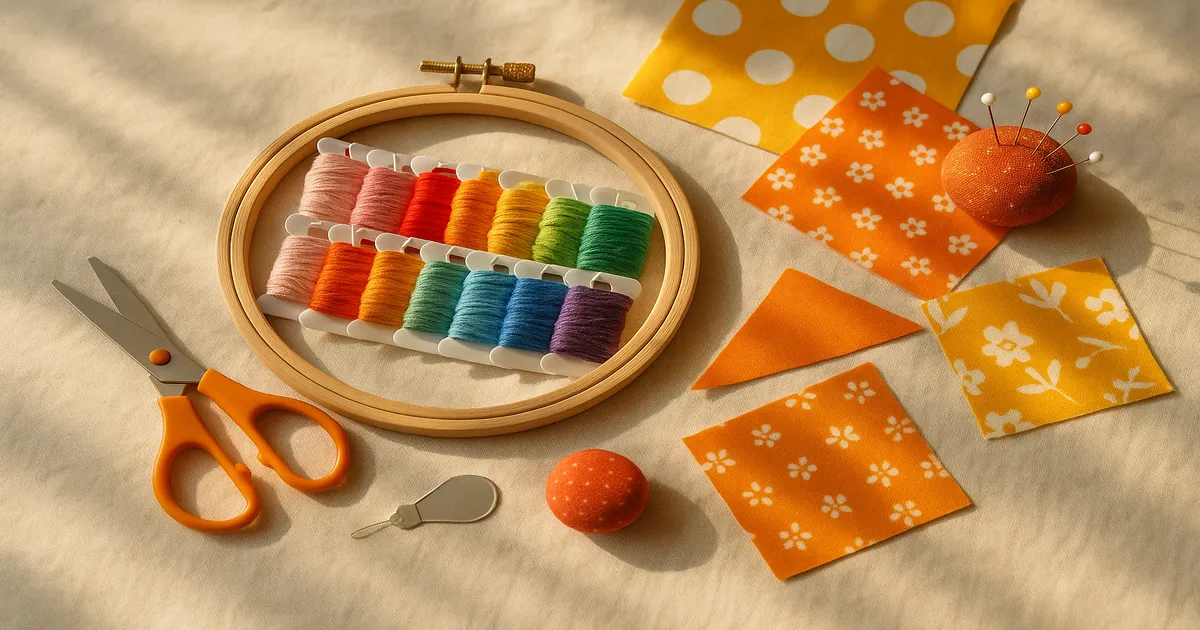
Quick Answer: Most kids are ready for basic hand sewing around ages 5–6, using blunt tapestry needles and simple felt projects like bookmarks. Supervised machine sewing typically makes sense from ages 8–10, once a child can follow multi-step instructions and handle a foot pedal with some control. This guide covers everything from first stitches to a child’s first real machine project — with the tools, techniques, and teaching tips that actually work.
If you’re looking for a genuinely useful skill to teach a child, sewing for beginners for kids is one of the best places to start. It’s not just a craft. It builds fine motor skills, patience, mathematical thinking, and the very real satisfaction of making something with your own hands. And right now, thanks to a wave of sewing content on TikTok and YouTube, kids are more interested in learning than they’ve been in decades.
This guide covers what age kids are ready, which techniques to teach first, what tools you actually need, and how to avoid the frustrations that make kids — and adults — want to throw the whole project across the room.
Sewing for Kids by Age: What to Teach and When
Maturity and fine motor development matter at least as much as age. These ranges are guidelines, not rules.
Ages 5–7: Pre-Sewing Activities That Actually Build Skills
Before a child picks up a needle, there’s useful groundwork:
- Lacing cards — punch holes in thick felt or cardstock and lace with yarn; this builds the exact in-out motion of hand sewing
- Aida cloth cross-stitch kits — open-weave fabric with a blunt needle and yarn, available as complete beginner kits
- Cardboard loom weaving — develops the over-under spatial thinking that transfers directly to sewing
- Fabric glue projects — introduces the idea of joining fabric before a needle enters the picture
Ages 6–9: Hand Sewing Fundamentals
This is when most kids are ready for a real needle — blunt tapestry style — thread, and their first actual stitches. Felt and burlap are your best friends here.
Ages 8–12: Introduction to Machine Sewing
A child who can follow multi-step instructions, sit still for 20–30 minutes, and handle a foot pedal gently is ready to try a machine. Start with orientation and paper practice before a single stitch on fabric.
Ages 11–14: Building Real Project Skills
Older kids can move into cotton-linen blends, simple knits, and more complex projects like tote bags or zip pouches. They’re also ready to start making their own cutting and design decisions.
Hand Sewing for Kids: The First Techniques to Teach
Threading a Needle (and Why a Needle Threader Is Completely Fine)
Use a size 18–20 tapestry needle — blunt tip, large eye, safe for young fingers. Cut thread to no more than 18 inches (46cm). Longer thread is the number-one source of tangles for beginners; enforce this rule every single time.
Teach kids to wet the thread end slightly, pinch it flat between two fingers, and push it through the eye. If that’s not working, use a needle threader — no shame in it, experienced sewists use them too. Finish with a quilter’s knot: wrap the thread around the needle two or three times, pinch the wraps, and slide them down to the tail end.
The Running Stitch: Start Here
Start on burlap or plastic canvas — the large holes act as a built-in guide and make it easy to see what’s happening. The goal is a consistent “in-out-in-out” rhythm that creates a dashed line. Aim for stitches about ¼ inch (6mm) long with ¼-inch gaps. Consistency matters far more than perfection at this stage. If you want to give kids a visual guide, mark dots on practice fabric at ¼-inch intervals before they start.
The Whip Stitch: Joining Two Pieces of Fabric
Hold two fabric edges together between thumb and forefinger. Insert the needle from back to front through both layers, then loop the thread over the edge and repeat, keeping about ¼ inch (6mm) between each stitch. This is the stitch for first projects — felt coin purses, small stuffed animals, bookmarks. Kids love it because the result is immediately useful.
Finishing Off a Seam
At the end of a seam, make two or three small backstitches in the same spot to lock the thread, then pass the needle under a few stitches on the back side and trim. No complicated knot needed — this is clean and secure.
Machine Sewing for Kids: A Structured Introduction
Learn the Machine Before You Touch the Pedal
Spend a full session on machine anatomy before anything moves. Kids should be able to identify the spool pin, bobbin, presser foot, feed dogs, throat plate, and tension dial. Teach them to turn the handwheel toward themselves — never away — to manually lower the needle. Practice raising and lowering the presser foot lever until it’s automatic.
Most beginner machines — the Brother CS6000i, the Singer Heavy Duty 4452, or the Janome 2212 — have color-coded threading paths printed right on the machine. Follow the path, wind and insert the bobbin per the model’s instructions, and practice the whole process three or four times before moving on.
Practice on Paper First
Print sheets with straight lines, gentle curves, and simple shapes spaced about ½ inch (12mm) apart. Have the child sew along those lines — no thread needed at first, just the needle punching holes. This teaches the single most important machine skill: watch the presser foot edge, not the needle. Say it every session until it sticks.
First Fabric Stitches
Use solid-color quilting cotton so stitch lines are clearly visible. Set the machine to straight stitch at 3.0mm length. For a seam guide, stick a strip of masking tape exactly ½ inch (12mm) from the needle — it’s far more visible than the throat plate markings for young eyes.
Teach backstitching from day one: three or four stitches forward, three or four back, then forward to sew the seam. Seams that aren’t backstitched fall apart, and that’s a discouraging way to learn.
First Real Project: A Simple Pillowcase
One shape, three seams, and a finished result the child can actually use. It’s the perfect beginner machine project for kids.
- Cut two pieces of fabric 20 × 26 inches (51 × 66cm)
- Place right sides together and pin every 3–4 inches (7.5–10cm)
- Sew three sides with a ½-inch (12mm) seam allowance, backstitching at start and finish
- Clip the corners at 45 degrees, cutting to within ⅛ inch (3mm) of the seam
- Turn right side out and press with an iron (adult supervision)
- Fold the open edge under ½ inch (12mm) twice and topstitch to finish
Tools and Materials for Kids Learning to Sew
Hand Sewing Starter Kit
- Size 18–20 tapestry needles — blunt tip, large eye
- 50-weight polyester thread — Gutermann or Coats & Clark; cheap thread breaks constantly and kills motivation
- Felt (1–2mm thickness) and burlap for first projects
- 5-inch blunt-tip scissors — Fiskars makes excellent children’s versions
- 4- or 6-inch embroidery hoop — keeps fabric taut and reduces puckering
- Needle threader — essential for young fingers
- Glass-head straight pins — larger heads are easier to handle
- Pin cushion — keeps pins off the floor, which is a safety issue, not just a tidiness one
Machine Sewing Setup
- Sewing machine — mechanical or basic electronic; the Brother CS6000i, Singer Heavy Duty 4452, or Janome 2212 are all solid choices
- Size 80/12 universal needle — change it at the start of every new project
- Seam ripper — the most-used tool in any sewing kit, by a wide margin
- 18 × 24-inch self-healing cutting mat
- 6 × 24-inch quilting ruler
- Disappearing ink pen or chalk marker for marking before cutting
Best Fabrics by Age
- Ages 5–7: Felt and burlap — felt doesn’t fray, burlap has large holes that are easy to stitch through
- Ages 8–10: Quilting cotton and fleece — forgiving, widely available, easy to press
- Ages 11–14: Cotton-linen blends, simple knits (use a size 75/11 ballpoint needle for knits)
Avoid satin, silk, chiffon, sheers, and heavy denim. Slippery fabrics shift constantly and require pinning skills beginners don’t have yet. Heavy denim breaks needles. These fabrics are genuinely discouraging for anyone new to sewing.
Common Mistakes — and How to Fix Them
Thread that’s too long is the single most common hand sewing problem. Kids think cutting a long piece saves time. It doesn’t. Anything over 18 inches tangles, knots, and breaks. Enforce the rule every time.
Pulling stitches too tight puckers the fabric and eventually breaks the thread. Show kids the difference on a sample piece so they can feel what correct tension is supposed to be.
Sewing over pins on the machine is a genuine safety issue. A broken needle can send metal fragments flying. Teach kids to remove each pin as the needle approaches — no exceptions.
Pulling fabric through the machine instead of guiding it distorts seams and can break needles. The feed dogs move the fabric; hands just guide gently.
Skipping the iron is the single biggest difference between a beginner-looking result and a polished one. Pressing seams isn’t optional.
Teaching Tips That Actually Work
“Slow is smooth, smooth is fast” — I’ve found this phrase genuinely transforms how kids approach the machine. Speed is the enemy of accuracy at the start, and framing slowness as a skill rather than a limitation makes a real difference.
Teach kids to read their stitches. Show them what correct tension looks like — flat, even stitches on both sides — versus too tight (fabric puckers) or too loose (loops visible on one side). That diagnostic skill is worth more than any single technique.
Frame the seam ripper as a precision tool, not a punishment. Every experienced sewist uses one constantly. If a child thinks reaching for it means they’ve failed, they’ll either hide mistakes or give up. Make it normal from day one.
For a child’s first machine project, pre-cut all the fabric pieces yourself. That way they can focus entirely on sewing without the added stress of accurate cutting.
Easy First Projects to Build Confidence
- Felt bookmark — two layers, whip stitch around the edge, done in 20 minutes
- Felt coin purse — two oval pieces, whip stitch, add a button closure for a challenge
- Simple stuffed animal — two identical shapes, running stitch, leave a gap for stuffing
- Pillowcase — the perfect first machine project (instructions above)
- Fabric tote bag — a great step-up once the pillowcase is mastered
Frequently Asked Questions About Sewing for Beginners for Kids
What age should a child start learning to sew?
Most kids are ready for basic hand sewing around ages 5–6, starting with blunt tapestry needles and felt projects. Supervised machine sewing is typically appropriate from ages 8–10, depending on fine motor skills and the ability to follow multi-step instructions. Maturity matters as much as age.
What’s the easiest sewing project for a child beginner?
A felt bookmark is hard to beat. It requires no hemming, uses a simple whip stitch, and finishes in one short session. For machine sewing, a pillowcase is the classic starting point — straight seams, one shape, and a result the child can actually use.
Is it safe for kids to use a sewing machine?
Yes, with proper supervision and a structured introduction. The key rules: never sew over pins, always lower the presser foot before sewing, and keep fingers well away from the needle path. Starting with paper practice before fabric helps kids build control before they’re working with real materials.
What needle and thread should kids use?
For hand sewing, a size 18–20 tapestry needle — blunt tip, large eye. For machine sewing, a size 80/12 universal needle works for most beginner fabrics. In both cases, use 50-weight all-purpose polyester thread from a reliable brand like Gutermann or Coats & Clark. Cheap thread breaks constantly and is genuinely discouraging.
How do I teach a child to sew straight lines?
Paper practice first — print sheets with straight lines and have the child sew along them before touching any fabric. When they move to fabric, put a strip of masking tape on the machine bed as a seam guide and teach them to watch the presser foot edge, not the needle. A contrasting thread color on light fabric also helps them see exactly where their line is going.